Alexander and Diogenes or: What Really Counts in Life

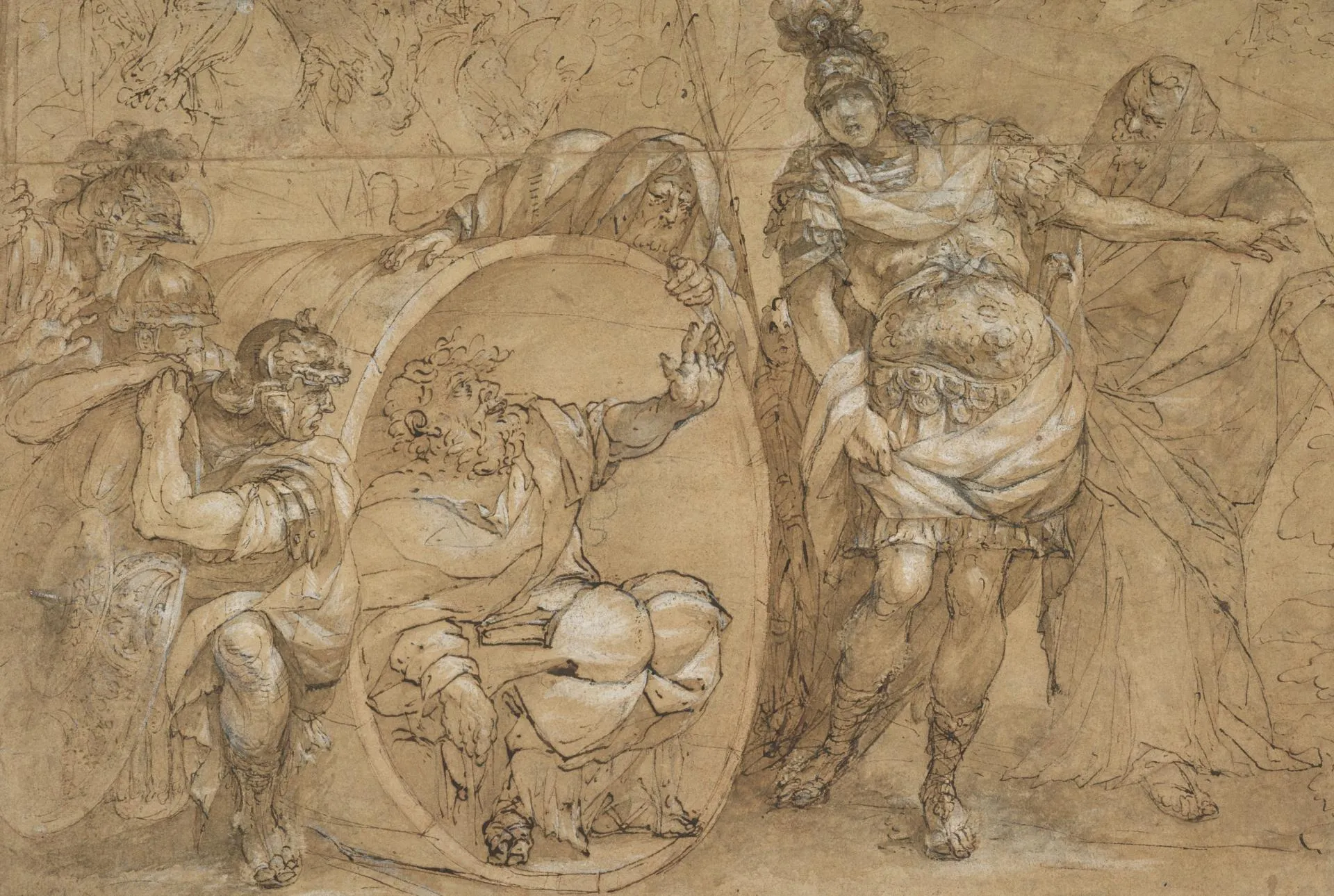
Drawing of Diogenes sitting in a barrel and Alexander in warriors' armour meeting.
Image: National Galleries of Scotland collection. Photo, National Galleries of Scotland. (Creative Commons license)

“Stand out of my sun.” Imagine that, said to the most famous conqueror and king of the time. That was Greek philosopher Diogenes talking, in ancient Greece, Corinth, to be precise, so legend has it. Talking to Alexander, who is still called the Great. Diogenes had become famous for his life style and believes: He refused all wealth, riches and luxury and is said to have lived in a barrel most of the time.

The barrel is most probably a synonym for extremely reduced living conditions. By choice, in Diogenes’ case. He was founder of a concept that circled around good deeds,  and a ‘return to nature’. The natural state of living. These ideas since have frequently cropped up in the history of mankind.

People are not all the same. Sounds simple, but it is not always. Some you’d rather not meet, such as those similar to the present president of the US. The ancient legend around Alexander and Diogenes of Greece makes that point, in very simple terms:

What really counts is to train your thoughts.

For many, wealth and fame as a goal in life often are considered to be the basic: The ‘pursuit of happiness’ it is also called, sometimes.

When people start looking for happiness in wealth and fame, because the applause of others seem to make them happy – or content, you may find yourself in ‘queer street’, as that old saying goes. In war, actually, which is not as funny as that ancient ‘queer’ phrase makes it seem, but cruel.
Greed and cruelty very often come with hunger for wealth and more wealth and power. But happiness people often miss out on.

The story “How Much Land Does a Man Need?” by Leo Tolstoy, great Russian 19th century writer, is just as eloquent and clear on the subject. Although it may seem obvious, the way Tolstoy renders it, it is compelling in its vivacity.

“Stand out of my sun.” There are people, who harm others just for their own good. I’d rather not have to meet them if I can help it.


Quiet vs Talk? – Talk and Quiet!

sunset trees lake

Times can be tough, I have seen many and gone through a lot of such times. I still consider myself lucky, in many respects.

I find that talking can be overestimated. But so can quiet. As has been said similarly elsewhere:
there’s a time and place for everything.

Sometimes we talk to others in order to exchange ideas, or information.

Sometimes we talk to others to feel close by being understood and listened to.

Sometimes we talk to others so we can make the heart’s burden lighter, or to let off the steam of anger.

Sometimes we talk to others to clear up things or answer questions.

But often, there’s nothing of the above necessary. We are at one with ourselves and our emotions and ideas.

In such times, being quiet can be the order of the day. Know that our near and dear understand.

In hard or sorrowful times, a good cry can help. Or letting off steam by punching something

Hugging near and dear helps.

Work helps.

And laughter helps. Always.


(First published in 2021, reposted.)

Freedom, the Eagle and the Relativity of Terms

Freedom – a big term, most often associated with flying, the eagle in the sky – the absolute lack of all fetters, shackles or limitations. Is it?

A dream. Even more than that: it is in these contexts – a human emotion.
There are these moments in life – when one is at peace with oneself and one’s surroundings – a fire outdoors in the night, surrounded by friends, music, good food and drink, perhaps.
The mountain top and a beautiful countryside on a day where vision seems endless.
A peaceful day at home, rain splattering against the windows, the rich fragrance of fresh home-made biscuits in the air.
These peaceful moments can convey a kind of freedom, and rich and full living. Perhaps at the core of the yearning: no ties and no responsibilities to be taken care of.
All’s well in the universe.

Yet, actually, there’s more to the idea of freedom. It also makes sense to differentiate. What I have put above is the personal freedom in a human’s life that can happen as an emotion on such occasions. Peace. Or exhilaration.
The exhilarating feeling that high above the world the sky is the limit…

To me, first and last, the definition and from there a repeated emotion of freedom is twofold: define what it is exactly, and why. Find out where it can be found, again.

So, first there’s personal freedom, a feeling perhaps, a strong emotion. There’s also the freedom in political and social life. It actually is the basis for the emotional situations I described above:

In a country, where it is not possible to try and reach your potential, to say what you think where and when you like, to dress how you like or go where you want – just the feeling of freedom, can be hard to find in personal life.

So next comes the question: what if all’s granted, but still, responsibilities are to be taken care of? The responsibility of taking care of a family can be difficult and weigh heavily on the mind.
Where is freedom then?

Freedom is in knowing your own limitations and your ‘escapes’ from routine, if there is one. And, in a community life, compromise. To go for what is good for many.

To find happiness in the small things, because you have figured out or seen what you don’t need to be happy, here and now. Your limitations.
The fragrance of a flower, the peaceful garden.
Dancing with friends, telling jokes and sharing thoughts – that’s what I found to be happiness in everyday life. Conveying the emotion of being carefree and lightweight.

Most importantly I realized that treasuring any moments given to us we feel this way, makes for a freedom that is independent of long trips, travelling the globe, the Bunjee jumping line – or flying into the skies: to know that it’s valuable, to you, your friends, your loved ones, now.

‘Glamour’? – Inside.

image of woman practicing yoga with rising sun behind her

Money seems similar to power: It corrupts… sometimes. I think the basic principle is the same as in other parts of life:
it depends on the perspective, on how you look at it.

Someone put it very nicely with these few words:
“If you believe it, it must be true.”

For some of those that read my blog, this is not news.
But I feel this to be an essential part of human life, indeed mankind and its history depend to a great extent on money and what it represents or means to different kinds of people.

Basic Concepts

The most important concepts in regard to money to me are: power, appreciation, wealth (and what it can buy as regards luxury).
Dignity.

Appreciation and Dignity

Appreciation as well as dignity go together in this context: Many people exist who will accept and even admire someone who’s got lots of money.

In turn that person feels respected and draws on this apparent respect for their sense of self-esteem. And the term that is closely connected, even a synonym, is the idea of dignity.

Dignity

The idea deserves a closer look: Dignity is the sense of any person they can have of themselves as being ‘respectable’ and ‘good’, therefore respected and part of the community around them.
And so, if dignity is forfeit, or seems to be, some people can react extremely aggressive and even cruelly towards those they hold responsible for that loss.

Find Distinctions

I would like to differentiate more, to ultimately make independence easier: We may be dependent to some extent on others, for money, for respect and thus simply their support.
But the dignity we retain always also depends on how we look at ourselves.

Money and Dignity?

If we connect these two ideas in a direct relation, namely: ‘money equals dignity’ and then at the first hint of losing money are convinced we’ve lost our dignity in the eyes of the world, this will be true.

Independence in Your Mind and Your Being

Again:
“If you believe it, it must be true.”

As long as you believe that money equals dignity, this will be true.

This is another way of saying that there are always two sides to this coin:
What others think about us.
What we think about ourselves.

And if we find others to be right in this view, this perspective on us, then they will gain power over our thoughts, our reactions and ultimately we may lose our free will.

Money and Values

Self-respect or self-esteem are crucial for being aware of eternal values and living them. And the sense of our dignity translates into these two.

So, to become truly independent of all the dark sides of the want of appreciation or self-respect or dignity, such as greed, cruelty and selfishness, find out about the dignity inside.

Dignity Inside

So, I encourage again, once more, all who read this:
Look carefully into your heart – and find the dignity and appreciation in there, the part that is not dependent on anything the outside world could ever believe.
If you can do that, no one will ever ‘mess with your head’, they will not have power over you, because you have it over yourself. First and last.

The Nerd, the Partygoer and the Bookworm – Perspectives and Judgement

Image of dog and cat playing together
Image courtesy pixabay.com – Free license

Life can be full of surprises. Especially when you expect a certain degree of ‘sameness’, that is people to be the same as yourself, or at least very similar.

Common assumptions are based on a few, sometimes almost crude, differentiations and types, such as the types of the title: the nerd, the partygoer and the bookish type, the bookworm. Interestingly enough, as soon as you use these terms, people start coming up with images in their minds:

    • The bookish type like the proverbial church mouse, grey all over, always buried in some book or other and perhaps even a little other-worldly. Not well-versed in the ways of the world.
    • The nerd, to my mind to some extent the modern version of the bookworm: Always having something or other to do with a digital device, the laptop these days, a smart phone, a computer or any other digital device you can think of. Buried too, in a way in their work.
    • The partygoer, a colourful appearance, rather talkative and even loud, attracting attention wherever they go, with pleasure, sometimes overdoing it a little, perhaps.

But these are the stereotypes. I am not saying they do not help. But if we use the stereotypes alone to judge people or to make sense of them, we may be mistaken.

There are not only ‘sub-types’. There’s usually more to human life and needs or wishes or dreams than just the external signs or the typical behaviour you may conclude because that’s all you are looking for.

In other words: Human beings and life are rather more colourful than a party dress.
‘There is more to it than meets the eye’: One might think of icebergs, the bulk of their mass is below the surface.

Try the kaleidoscope, it’s a favourite image I use to make my point. There’s black, white, green and red. But there are so many more colours to it, to life that is. There’s grey, gold and silver and heaps of others. And each comes in so many shades, too. (Not just shades of grey.  😉 )

I am a person who always has loved books, for me reading is like talking in my head. I hear language I write practically the same way, too, the same way I hear spoken words: With melody to it.

I know not everyone is the same; some people just do not like books or reading that much and avoid it if they don’t have to. I respect that.

I think it is vital for a peaceful existence to accept diversity, the truly colourful existence on this Earth, of humans as well as any other living or breathing entity.


Knowledge – Wisdom – Marketing – Stereotypes – What Reading and Thinking Can Do for You

image of beach at sunset and family walking
Image courtesy pixabay.com – Free license

Erich Fromm, Alexander Lowen, Sigmund Freud, Leo Tolstoy, Fyodor Dostoevsky, Victor Hugo, Alxandre Dumas, Charles Dickens, The Brontë Sisters, Shakespeare, Plato, Immanuel Kant, Aristotle,…the list goes on and on and on…. And those are only a very major few dealing with live, love, sex, gambling, man vs mankind, culture, thoughts, ideas in human life, right, wrong, and human needs. I’ve read so many books in the course of my life that I can truly say they cover a mid-sized library. A couple of thousands.

Opposed to that are the images you find in many Hollywood movies (often especially the ones drawing huge audiences), on Social Media – strange word for such a rather ‘un-social’ market place – but then, ever since the Ancient times it was common calling bad or problematic things by good names – to lessen the fear or dread of it, such as the Black Sea known to be dangerous to sailors. They called it “Pontos Euxeinos” in Greek, the friendly, kind sea.

Market places: Marketing images are everywhere – and they ‘feed’ on stereotypes.
Reading and thinking on your feet, you might say, trains the mind; trains your thinking, to go beyond common images, and be – at some point – a complete and wholesome human being rather than someone chasing the latest fashions in order to be fashionable – and be ‘IN’.

The monster, the lady in distress, the prince and the common man to rescue her so they can fall in love with her afterwards…
C.G. Jung, a Freud-disciple, called them ‘archetypes’ that have been around for many centuries in human existence, in the West at least, and patriarchal society, and thus are part of all our common (usually unconscious) heritage of ideas and wishes.

Most important in this respect to me are these ideas:

Knowing about something does not mean you had to do it first in order to  understand.

Wisdom is not the same thing as knowledge. Wisdom is the combination of empathy (know human emotions) with experience and knowledge to truly understand human life.

“The Sabbath Is for Man” = Rules Are for People

Peace pagoda Nepal
World Peace Pagoda – Nepal

Rules and the law often are taken in cases of dispute among people, businesses or just neighbours, as a means to ‘fight’ for what one feels to be a right.
One’s own and individual right to do or be as one pleases.

To me, raised by parents who took ethics as well as clear thinking seriously and thus the enlightenment, the following adage of the bible is a fine example of how to treat rules:

The bible, large and ancient book of wisdom has it like this: Jesus as a grown-up and increasingly famous and respected preacher and scribe one day was asked about picking corn on the sabbath.
Many of my readers may know already that among Jews the sabbath is and was a strict holiday on Saturdays each week. To be observed with total obedience to the rule that no work whatsoever was to be done that day.
That’s what makes the answer so special, in those times.

His answer is recorded in Mark, chapter 2:

2:27 And he said to them, ‘The sabbath was made for man, not man for the sabbath;
(The Jerusalem Bible translation)

Pure and simple this means that rules are there to make life better and easier among human beings, not to be observed at any cost even the risk of losing health or lives.
He goes on to say:

2:28 the Son of Man is master even of the sabbath’.

That’s one reason why I like the idea that rules are originally meant as a ‘crutch’ or a framework to support.
Not as walls or fences to divide, separate and make enemies. In my opinion the sense of a rule and the exact facts of the case should be taken into account. As well as a close look at people concerned and their needs, to try and find a way to live better and peacefully together in this world.
Peace in small matters can spread – to the larger issues and arguments among nations to eventually be solved without war.

Judging, Judgmental, Truth – or How Images Are ‘Born’

picture of a marked calendar with people

Judging your peers, your neighbours or your near and dear can be tricky, if you take it seriously – and would want to do them ‘justice’.

Imagine the case before a court, where all the evidence seems to point in one direction; only, this time you would be convicted.
Although you know that you are innocent. It would be an emotional torture, to say the least.

An image is ‘born’? Yes, in the mind, by using words and going on from there. Of course, generally you would say it is created. But the ‘born’ simile makes it clearer:
The ideas and the underlying images we as humans have and sometimes create based on simple and insufficient impressions are ‘born’ in the mind at some point.

So, judging someone can be a tricky process:
Again, imagine a timeline and then try and mark the occasions on it you really meet another person. And how much time and work and your own thoughts and ideas and tasks pass by on that timeline mark as well.

You may come to realize that in between all the hustle and bustle of everyday work there are actually very few impressions you could judge by…

In philosophy for ages it has been a whole topic of research, how humans do know / understand: the epistemeology.

In criminology I used as an example up there this knowledge has been refined since the 18th century, especially.
It’s been an age old saying too, that on any ‘case’ of doubt, you should hear at least two people’s accounts.

So, let’s try to remember that any fleeting impression or occasional encounter can only provide very limited ideas of what the whole person means – in every sense – and is.
If in doubt, try putting yourself in their place, as regards being judged – with care and precision.

The bible has it too, more ancient yet to the point (quoted from Wikipedia):

1 Judge not, that ye be not judged.
2 For with what judgment ye judge, ye shall be judged: and with what measure ye mete, it shall be measured to you again.
3 And why beholdest thou the mote that is in thy brother’s eye, but considerest not the beam that is in thine own eye?
4 Or how wilt thou say to thy brother, Let me pull out the mote out of thine eye; and, behold, a beam is in thine own eye?
5 Thou hypocrite, first cast out the beam out of thine own eye; and then shalt thou see clearly to cast out the mote out of thy brother’s eye.

— Matthew 7:1–5 (King James Version)

(English subs available)


Religion – Life – Philosophy – Strength of Mind

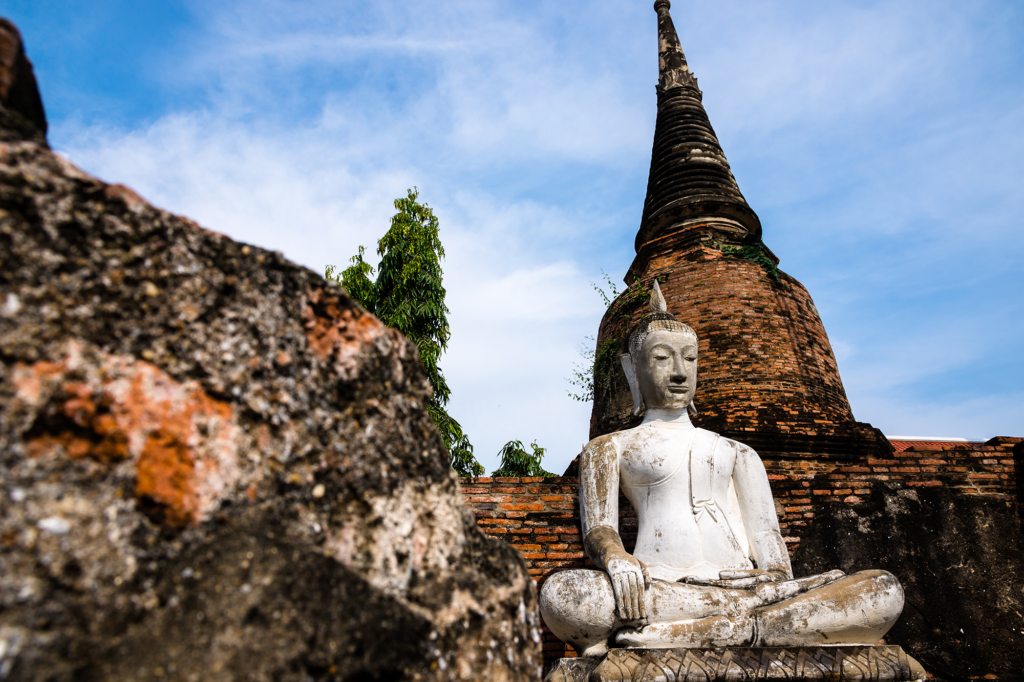
ancient-buddha-stucco-white-old-red-brick-thai-ancient-tradition-pagoda

I was raised as a Catholic, by parents who at the same time were enlightened philosophers, in the sense of the philosophical enlightenment founded in the 18th century in the middle of Europe, with British, French and German philosophers at the helm of it.

I have since had the luck to be part of a university’s body as a student and graduate, with famous researchers in religion, philosophy, language and culture close at hand. I have read and thought, and discussed matters of religion, philosophy and culture for decades. To me it became clear in the course of many years that for all the sorrow, cruelty and hardship a human being may go through and endure, one thing remains adamant and is the core concept to me:

Love.

Much has been written about it, songs been sung, and operas, poems, books , plays been published. Although money seems to be the one driving force in human life – love, in all its shapes, is the other.

And when hardship falls on us, loved ones die or we just have to face humans that have decided to go the other way, love can carry us through.

I also think it important that we find the love inside of us:
because if we only search for it outside, only half of all our potential will be made true.
That’s why I find the concept of ‘neighbourly love’ crucial as well as helpful, as we know it from Christianity: ‘love thy neighbour as you love thyself’.
Psychology actually supports this concept:
only if we like and support ourselves, body, mind and soul the same way we would our near and dear, will we have the strength to do it – support both, ourselves as well as others. And we endure hardship easier.

I am not the first to say it and certainly will not be the last. In the bible one of the most beautiful texts about love is this:
Paul’s 1st letter to the Corinthians, chapter 13.

The Willow Tree – and the Fight for Life

I like the saying: ‘when you fight you can loose. Not to fight means you have already lost.’

I also remember the principle from jujitsu many years ago, apparently part of its age-long tradition:
‘Be like the willow tree that bends before the storm – and then darts back. Yield in order to win.’

Fighting may sound like: ‘be strong – and hard.’

To me it’s more like this:
‘Persevere – hang in there. And: don’t forget about the breaks!’