Alexander and Diogenes or: What Really Counts in Life

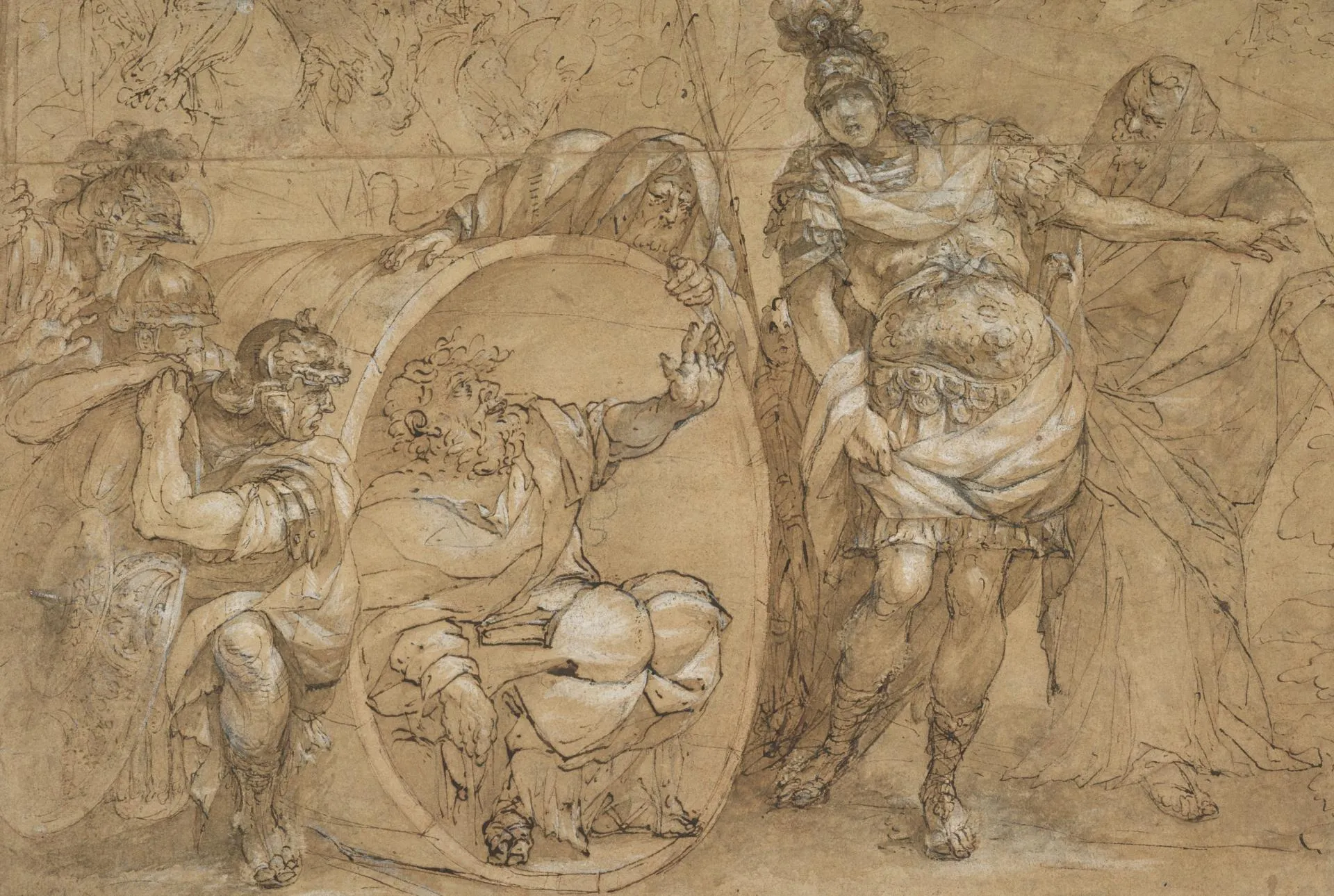
Drawing of Diogenes sitting in a barrel and Alexander in warriors' armour meeting.
Image: National Galleries of Scotland collection. Photo, National Galleries of Scotland. (Creative Commons license)

“Stand out of my sun.” Imagine that, said to the most famous conqueror and king of the time. That was Greek philosopher Diogenes talking, in ancient Greece, Corinth, to be precise, so legend has it. Talking to Alexander, who is still called the Great. Diogenes had become famous for his life style and believes: He refused all wealth, riches and luxury and is said to have lived in a barrel most of the time.

The barrel is most probably a synonym for extremely reduced living conditions. By choice, in Diogenes’ case. He was founder of a concept that circled around good deeds,  and a ‘return to nature’. The natural state of living. These ideas since have frequently cropped up in the history of mankind.

People are not all the same. Sounds simple, but it is not always. Some you’d rather not meet, such as those similar to the present president of the US. The ancient legend around Alexander and Diogenes of Greece makes that point, in very simple terms:

What really counts is to train your thoughts.

For many, wealth and fame as a goal in life often are considered to be the basic: The ‘pursuit of happiness’ it is also called, sometimes.

When people start looking for happiness in wealth and fame, because the applause of others seem to make them happy – or content, you may find yourself in ‘queer street’, as that old saying goes. In war, actually, which is not as funny as that ancient ‘queer’ phrase makes it seem, but cruel.
Greed and cruelty very often come with hunger for wealth and more wealth and power. But happiness people often miss out on.

The story “How Much Land Does a Man Need?” by Leo Tolstoy, great Russian 19th century writer, is just as eloquent and clear on the subject. Although it may seem obvious, the way Tolstoy renders it, it is compelling in its vivacity.

“Stand out of my sun.” There are people, who harm others just for their own good. I’d rather not have to meet them if I can help it.
Rhythms, Nature and Light: Circadian Rhythms, the Clock and Our Lives

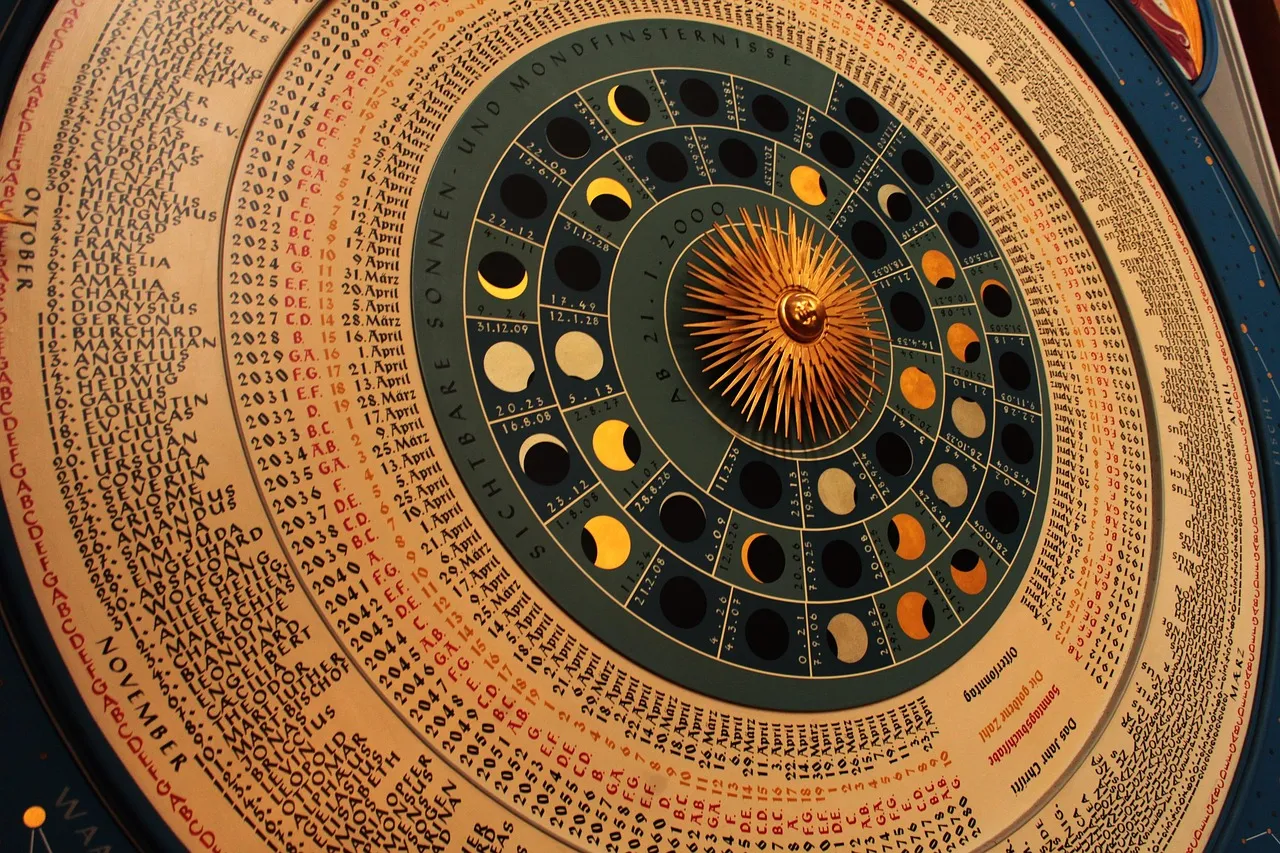
An old clock of a church showing calendar and sun and moon phases on the same dial.
Image: Lübeck, St Mary’s church, clock image. Free for use, pixabay.com.

We all know that a clock is something to show us the time of day. An apparently simple device, in former centuries the sun’s course as a sign on a dial: The sundial.

To some extent that also shows nicely what can be ‘off’ at times these days: Our natural rhythms that depend highly on the light and dark changes of the region we grew up and live in.

The research on that is part of medicine as well as the humanities, social sciences: What is it that determines our health apart from moving our body regularly and eating the good food?

It’s the rhythms of sleep and being awake that in turn are based, by nature, on sunrise and darkness.

‘Circadian rhythms’ is the phrase for it. One fine entry by Harvard Medical School can be found here, a recent study’s results that are suggestive: Circadian Rhythms and the Brain

A while ago already the so-called ‘daylight saving time’ was introduced in many countries. Depending on where we live the clock will be turned forward an hour in spring and back in fall.

The original idea was to actually save energy, power consumption and thus also fossil fuels.

It already has been widely acknowledged that the effects are rather negligible in terms of power saved. On the other hand animals, children and quite a number of grown-ups feel the effects more than we would perhaps believe.

Sleep disorders or sleep deprivation are serious issues in regard to health. They can cause even illnesses.

The turning of the clock does not lead to such disorders necessarily.

But the idea of natural rhythms and an innate need for sleep, rest or wakefulness can be crucial.
Just as the self-awareness of ancient systems for improving health, such as Yoga, Ayurveda and TCM (Traditional Chinese Medicine) can make a difference in a person’s life.

So, if you were wondering too, what is helpful, it can be the start to understand that our body is a fine-tuned and highly efficient instrument, whose functions were developed over hundreds of thousands of years.

Starting to treat your body as your friend can make all the difference.

AI Saves Time? – or: Ideas, Inspiration, Human Intelligence and the Machine

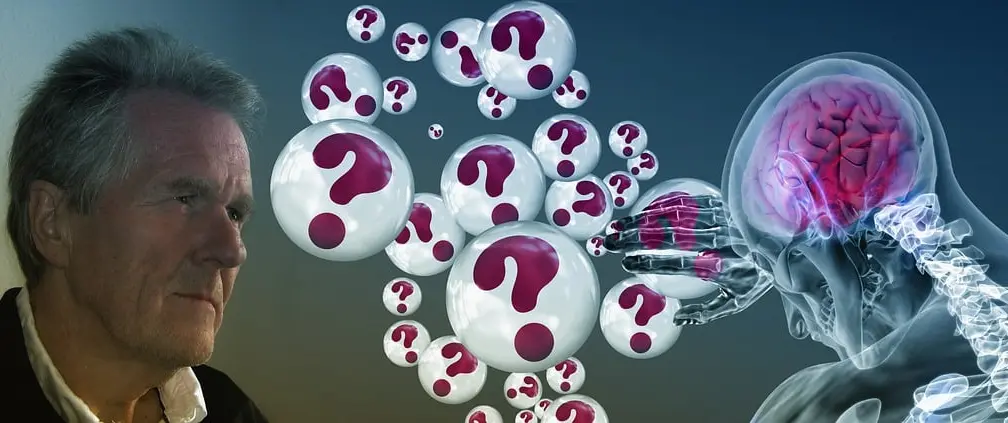
Image of a man, some bubbles with question marks in them and a figure that looks like an android, its hand raised in direction of the bubbles, its back to the viewer, the man looking rather strictly at the figure.
Image by Gerd Altmann from Pixabay

AI, so it appears, saves time: Let it summarize a longer text for you which you do not have the time to read in full. Let it make (‘generate’ = Gen AI) a little image you could use in an online blog post. Even let it create whole (short) videos to use for posting and sharing online…

Well, so far the theory.

Yet, as so often is the case, theory and practice are not the same thing at all.

You can use AI for all of the above these days. But the fact remains that AI is not really intelligent. The term ‘Artificial Intelligence’ suggests it, of course. But that’s a marketing term. Using ‘create’ as a term makes it appear as if… there was actually something creative.

Because, what AI does is reuse already known material and re-assemble in a likely manner.

How Do I Know?

As a technical writer by profession I documented AI successfully. The US-agency Gartner mentioned that documentation specially in their Magic Quadrant on Metadata Applications in 2019.

Since then I also have tested all the popular AI tools you can use for such tasks online and offline, such as ChatGPT, Le Chat, Claude, ‘Copilot(s)’ or a plugin called AMP.
In technical writing you could use these as a sort of optimization tool. Once your text is ready, let the AI go through it and optimize according to standards.

But in technical documentation as such, content creation or creation of visual material, AI is not really helpful.

Why?

    • You need a good idea of where you want to go with this, of what you actually need.
    • You then need to write a prompt for your AI tool to have it generate what you want.
    • When the output is available, you need to check, for facts, for correctness of representation, for quality.
    • Very often the first few attempts fail because AI will just re-use already known data for the patterns to find and re-assemble.

That’s why you often see AI-generated images or videos that look strangely puppet-like, smoothed in all the wrong places or simply skewed.

Texts on the other hand will be somehow always ‘like that other one’.

The technology behind AI makes this practically an unavoidable scenario:

    1. AI is based on algorithms: they are like chains of formulas. These formulas basically depend on probability, statistics and their patterns.
    2. Once the AI’s framework is in place, it will be trained on certain data that fit its use case. The algorithms and their sequences may then be refined.
    3. Finally the new data such as online databases is used to find more patterns, of the same or similar.

Therefore, you cannot replace humans with AI.

Because, in complex uses cases, these things take time. Because, anything you will let an AI generate will always remind you of something. It will sometimes appear a little lifeless, even strangely familiar. But it will never be unique. Never have that feel about it. And miss out on that ‘spark of inspiration’ that makes human intelligence so special.

“Call for Weapons is Open Again”? – War, Peace, Negotiation and Realizing Power-balance

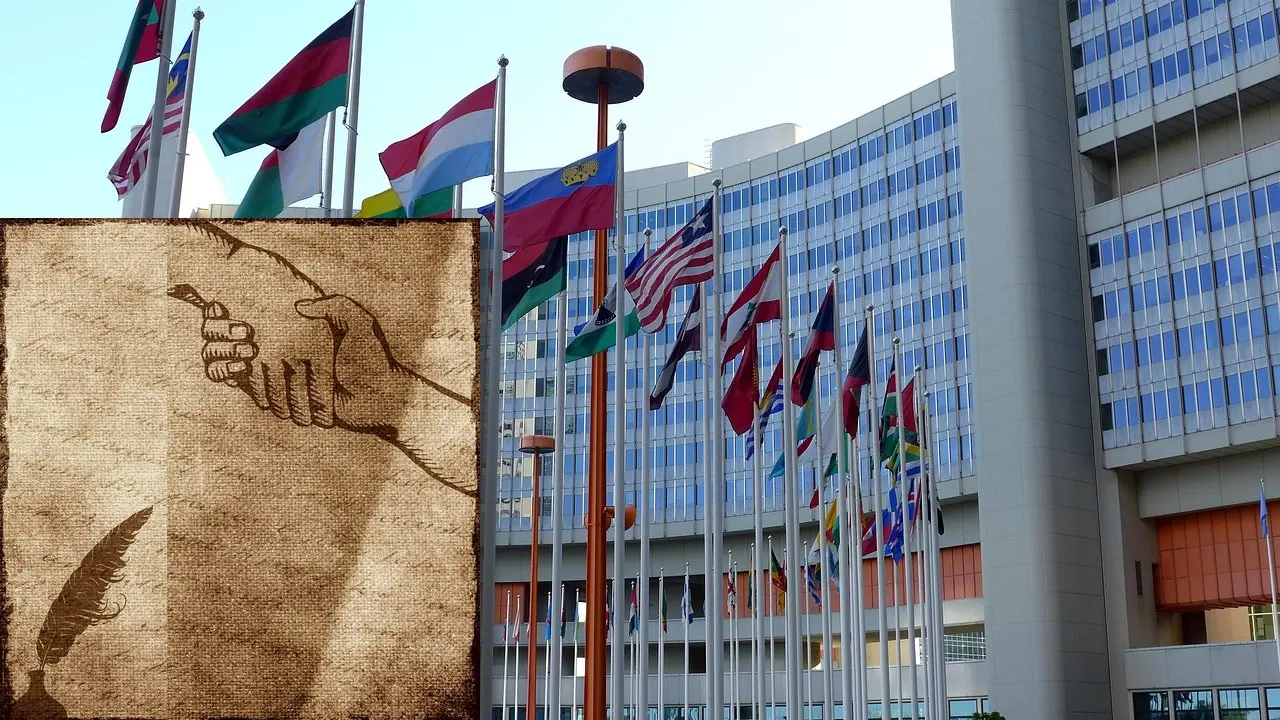
Picture of the UN building in Vienna in front an ancient scroll shape showing two shaking hands.
Image by Dorothe Wouters, and general content, from Pixabay

“Negotiate the hell out of them”… da…rn it. – I’d like to say that directly sometimes to the people concerned at present trying to reach an end to that war, that was unnecessary in the first place, if…
Yes, if people would do their homework, people in power learn from history, and those who know:

Diplomats, for centuries learned ‘at their mothers knee’ what is essential in any kind of politics you may want to conduct:

    • Realize that in politics it is about money, power and – 3rd party interests, those of your own country as well as those of others.
    • Know your opponents’ interests as well as possible. 
    • Realize that it is about power-balance just as much as saving face!
    • The one-time elegance of manners stems also from here: Get to realize that treating the opposing party with respect and the usual formalities makes all the difference.
    • Learn to be patient! Patience – without giving up, or in – is the most important characteristic of successful negotiating.

The Thirty Years’ War in Europe raged exactly that: 30 years.

Whole regions were wasted and cities laid bare because of plundering, murder and legions of soldiers passing that had to be kept, resulting in hunger, starvation and more death.

The weapons’ industry and its entourage are the only ones – if they survive it – that profit from a war.

So, let’s keep telling them: We want peace, we want a power-balance, at least. We want that cruelty and useless destruction to stop, now.

The Thirty Years’ War took 5 years to end it. 5 years of negotiations.

Patience is the order of the day. Not more profit from yet more weapons.

Pick Your Battles – Or: Focus on Strength

Image of woman on mountain top before sunrise
(Image licensed via Adobe CC)

I have posted about wars. This is about the smaller ones in everyday life. We can make an issue out of every little thing. Sometimes, people will misunderstand it if we don’t. I had to fight a lot in the course of my life. I learned one thing for sure:

Many things can become big, even huge in the eyes of the world ‒ or our own ‒ if we make them that. Fighting is proven to ‘take it out of you’: You can become angry, even furious once you have chosen the issue. You start an argument, perhaps. Things even may escalate into a full-blown conflict that rages for years.

And for what, really? So often we will come to realize that a lot of things are not worth the energy, because:

Fighting saps one’s strength.

I am not talking about becoming angry ‒ and letting off steam. That’s important in a healthy way and done safely in order to not hurt others.
But fighting?

Fighting takes it out of you, the effects can become really dangerous to our system. Because, the way we deal with anger or even frustration is something we can learn ‒ and manage. So much in life depends on how we look at it. Strong emotions are part of our mindset ‒ that is also: part of how we evaluate what happens to us.

The first flush of anger may be involuntary ‒ but after that, it’s a choice. To save health and nerves and keep frustration at bay.

Because, also, so often looking back, we may regret unnecessary fights, especially with people we like or love.

That’s why I make it a point in my life ‒ and a plea here for all who are wondering: Pick your battles. The next one may be really worth it.


Author’s Note:
I write about such things because I learned early in life how easily we all tend to make our life difficult or even hurt the other’s feelings without meaning to. Misunderstandings too, are easy.  I have a strong background in workplace psychology, among many other fields of interest, be that history, philosophy ‒ or politics. I also have come across many misjudgements in life ‒ in private life or in business.
Enlightenment is a philosophical approach and subject ‒ to me it is essential to understand ‒ and make understood.

Sons or Daughters… Rudyard Kipling: “If: A Father’s Advice to His Son”

Photo of a vertically shaped red rock before a blue sky
Image free license freepik.com

If you can keep your head when all about you
Are losing theirs and blaming it on you,
If you can trust yourself when all men doubt you,
But make allowance for their doubting too;

If you can wait and not be tired by waiting,
Or being lied about, don’t deal in lies,
Or being hated, don’t give way to hating,
And yet don’t look too good, nor talk too wise

If you can dream – and not make dreams your master;
If you can think – and not make thoughts your aim;
If you can meet with Triumph and Disaster
And treat those two impostors just the same;

If you can bear to hear the truth you’ve spoken
Twisted by knaves to make a trap for fools,
Or watch the things you gave your life to, broken,
And stoop and build ’em up with worn-out tools

If you can make one heap of all your winnings
And risk it on one turn of pitch-and-toss,
And lose, and start again at your beginnings
And never breathe a word about your loss;

If you can force your heart and nerve and sinew
To serve your turn long after they are gone,
And so hold on when there is nothing in you
Except the will which says to them: ‘Hold on!’

If you can talk with crowds and keep your virtue,
Or walk with Kings – nor lose the common touch,
If neither foes nor loving friends can hurt you,
If all men count with you, but none too much;

If you can fill the unforgiving minute
With sixty seconds’ worth of distance run,
Yours is the Earth and everything that’s in it,
And – which is more – you’ll be a Man, my son!


Holds true for daughters too…

Rudyard Kipling is not only author of ‘The Jungle Books’, that story of the ‘man cub’ Mowgli that is known across generations of children. He also was a memorable poet and writer, who wrote poems that are to the point and rhythm, as it were…as well as prose that is full of imagery and imagination.

His political views are rather doubtful and informed by the times he grew up in, but otherwise: Highly recommended. 🙃

“The Silent Majority” – The 100-People-Rule

Image of many figures like pieces in the blue dark, one of them in red and highlighted standing out.
(Image licensed freepik.com)

In former times it seemed to be a matter of course to talk about the ‘silent majority’. And it also seemed to be debatable: Did it exist?

These days we know: It does!

The statistics you get from business departments such as support, online and offline, confirm:

For any person letting a company, an organization, or platform know about their issues or problems or worries, there are around 100 silent ones who do not speak up. Some are too lazy. Some are too busy. Some are just too self-conscious, don’t dare to draw attention to themselves.

Whatever the reasons may be: I also know from actual experience how often people in everyday life underestimate the universal facts of human life:

Emotions, feelings, worries and also joy so often are felt very similarly. Yet, very often also people don’t know about that and therefore feel disconnected.

Sharing helps: Experience, emotions, and thoughts. And my blog is one place where I like to share for exactly that reason. To help and to spread perhaps a (little) light of understanding.

War is Politics – War is Business – War Kills People – War ist NOT Heroism

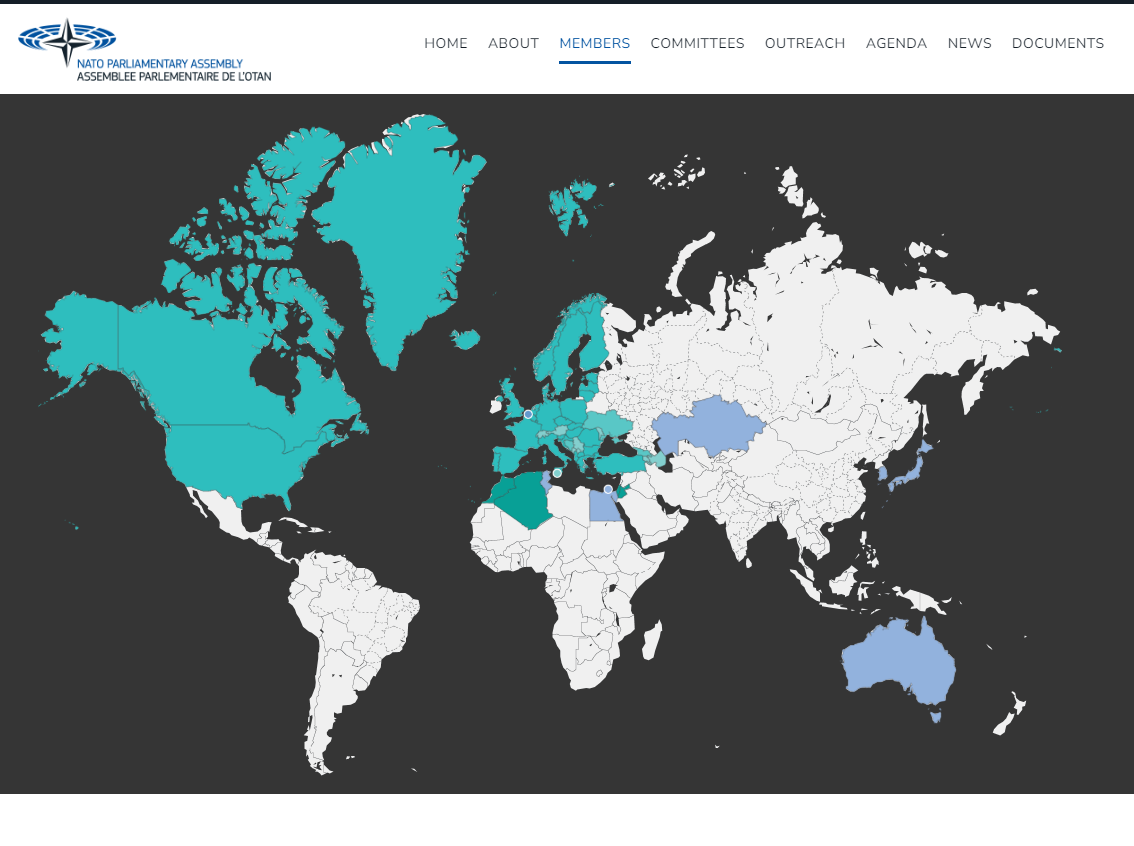
image of nato members among all nations on a map
Map of NATO members taken from NATO website at 23-11-2024_16-55-31, UTC+1

The other day I was looking up a job offer and checking out the website of a company that is not only into technology – but also into war-relevant products.
They actually stated in so many words that the present world politics were beneficial to their business – and that they expected their revenue to rise accordingly.

Do we really need any more proof? Isn’t history full of the news that came later – sometimes 30 years or more later – to inform the general public of what was classified information at the time?
That weapons and military and their supplies are part of the machinery… war.

Let’s remember that still we as the population, the voices of each of the peoples of the world are the ones who can do it as a whole:

Let them know that we do not want to be turned into cannon fodder.

The map above is the one of the current member states of NATO, taken at the time of writing this article; the date given also above, including the original URL and time of today, the 23rd of November 2024.

When you look at it you may understand better what it might feel like to live in one of the white spaces; especially lands to the east of Europe.
Why I mention it?
Because negotiating becomes so much easier if you know how the people facing you feel. 

I am a German born and bred who was married to a Persian for more than a decade. I learned about humanism and enlightenment when I was still a girl.
My parents were careful to impress upon us all through childhood and adolescence to look closely and let our judgement not be clouded by advertisements – or propaganda.
And what is propaganda other than a sort of advertisement? 

The human rights declaration and the Buddhist concept “Avoid pain” are the basis I argue from.

Look into history and learn: War never ever was a necessity or a heroic deed or a defense of a religion: It always was the failure of politics to be patient and continue negotiating until a proper agreement with all concerned was reached. It was part of the system of greed that stampedes over everything – including bodies.
Such negotiations can take years, decades even.

But if you look into history again, you will find numerous examples – the European Thirty Years’ War not the least of all – that confirm this view.

The Thirty Years’ War raged in Europe for exactly 30 years. More than half of the population of all Europe was killed, whole regions laid bare of any people, laid waste for decades. The destruction was tragic.
Even more cruel and dreadful were the crimes committed in the period: Rape, plunder and murder all through the lands, and recorded carefully too made it something that was part of the common memory of the European survivors for ages.

Again: War is politics, war is business, war is no necessity, and no heroic march either. War kills people, and cruelly.

Quiet vs Talk? – Talk and Quiet!

sunset trees lake

Times can be tough, I have seen many and gone through a lot of such times. I still consider myself lucky, in many respects.

I find that talking can be overestimated. But so can quiet. As has been said similarly elsewhere:
there’s a time and place for everything.

Sometimes we talk to others in order to exchange ideas, or information.

Sometimes we talk to others to feel close by being understood and listened to.

Sometimes we talk to others so we can make the heart’s burden lighter, or to let off the steam of anger.

Sometimes we talk to others to clear up things or answer questions.

But often, there’s nothing of the above necessary. We are at one with ourselves and our emotions and ideas.

In such times, being quiet can be the order of the day. Know that our near and dear understand.

In hard or sorrowful times, a good cry can help. Or letting off steam by punching something

Hugging near and dear helps.

Work helps.

And laughter helps. Always.


(First published in 2021, reposted.)