Circadian Rhythms – “Daylight Saving Time” or: “My Way”

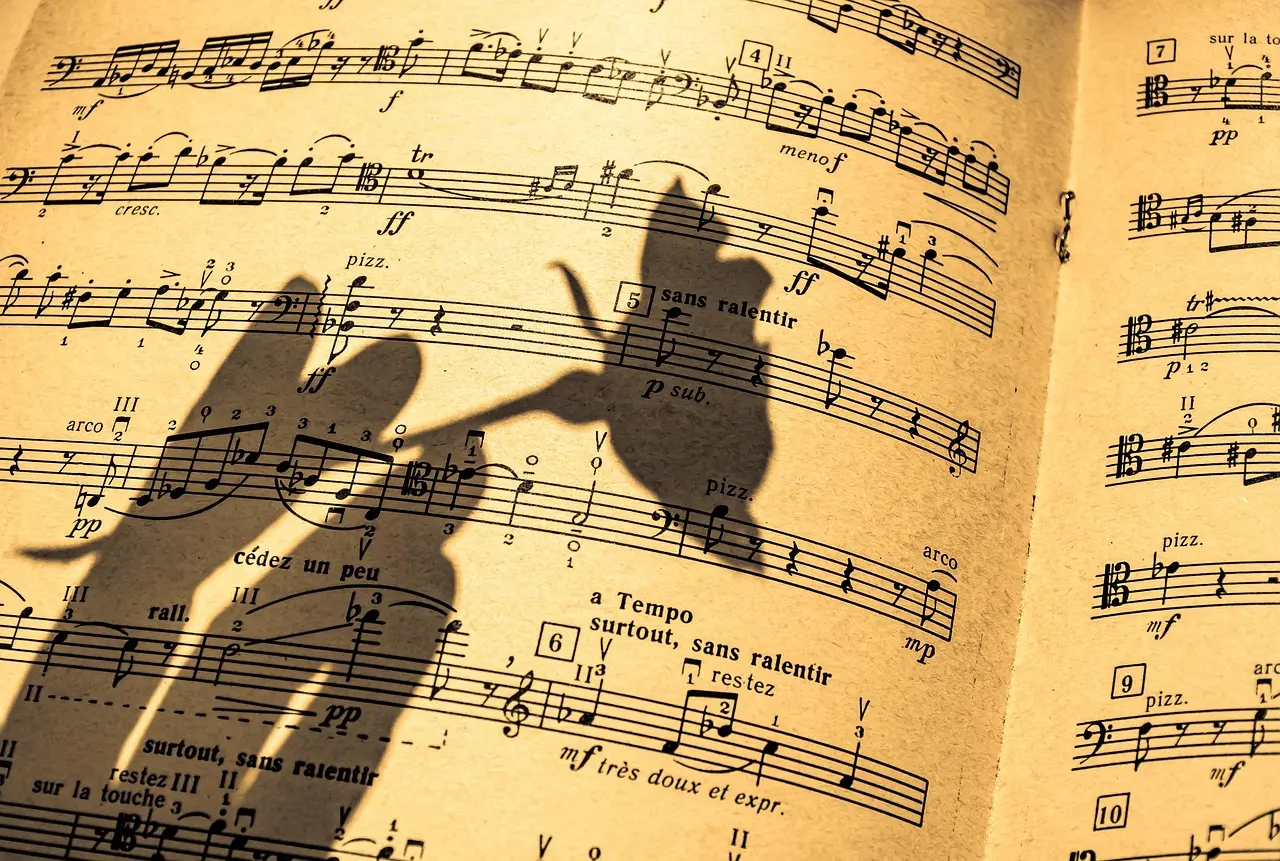
A music sheet with notes, and the shadow of a hand in front, holding a rose.
Image by Ri Butov from Pixabay

“My Way” is a song first rendered in French, actually: Comme d’habitude. The English version has the same melody but different text, saying that a full life can mean to do it ‘your way’. To me there’s of course community. Or the necessities of earning a living. But preferably with things I love to do. In my case that’s texts and technology, being a technical writer.

Yet, in my free time I like to listen to my inner rhythms. The ‘clock’. The necessities arising from an eventful professional life and other considerations, making it a challenge at times.

I’ve learned doing Yoga routines. I know about Ayurveda and Traditional Chinese Medicine.  Enough to know that being at one with yourself can mean:
“Less is more.”

Circadian rhythm refers to the fact that the sunlight and darkness means something to our everyday life. There’s a lot of scientific research around by now and they confirm the age-old systems I just mentioned.

It may also depend on the phase in life we go through which can mean that adventure or eventful days are aimed at.

But “the times they are a’changin’.” In other words, to be able to live calmly and quietly, doing the mundane things, really, such as writing here; exchanging ideas. Or have a fine, late breakfast on a holiday, with friends even, can be the ‘order of the day’.
Blissful living in the true sense of the word.

Rhythms.
Rhythms, Nature and Light: Circadian Rhythms, the Clock and Our Lives

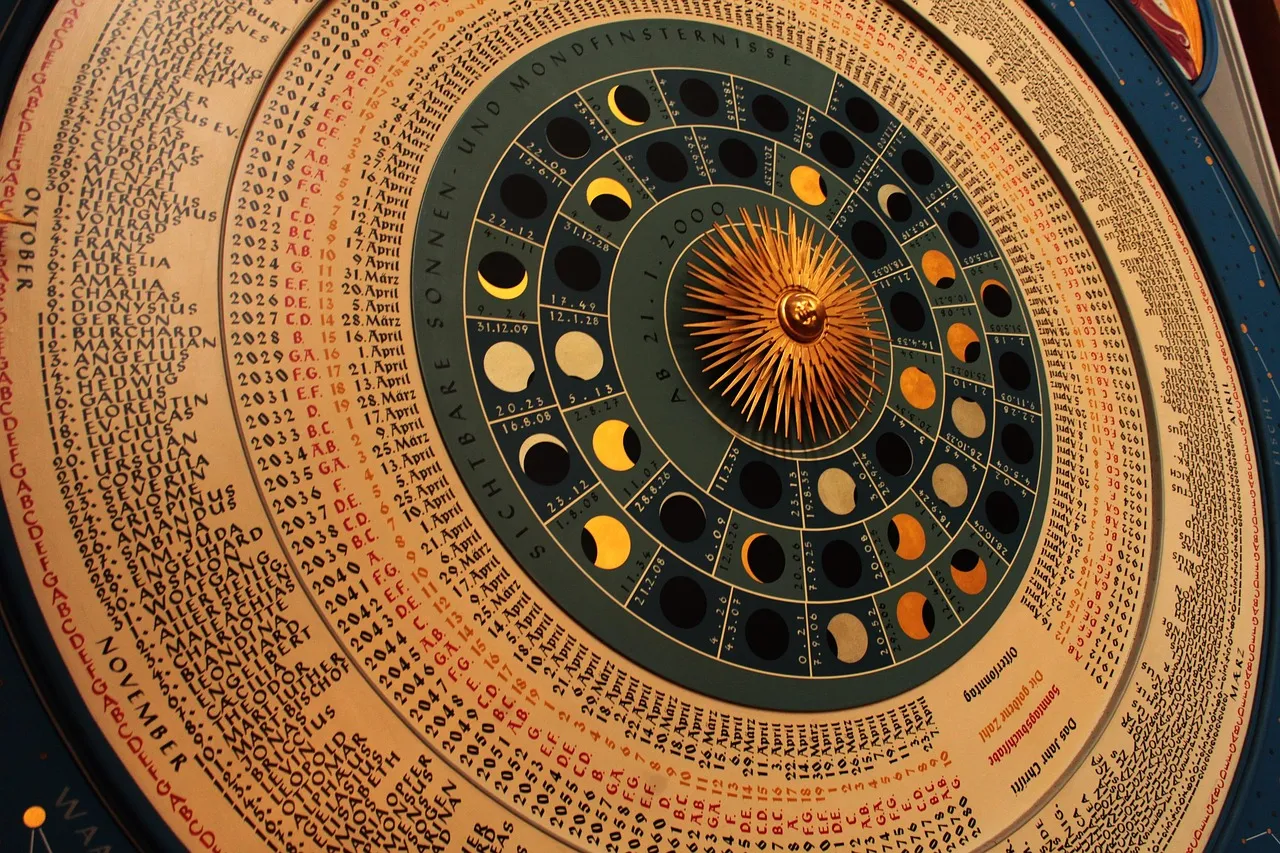
An old clock of a church showing calendar and sun and moon phases on the same dial.
Image: Lübeck, St Mary’s church, clock image. Free for use, pixabay.com.

We all know that a clock is something to show us the time of day. An apparently simple device, in former centuries the sun’s course as a sign on a dial: The sundial.

To some extent that also shows nicely what can be ‘off’ at times these days: Our natural rhythms that depend highly on the light and dark changes of the region we grew up and live in.

The research on that is part of medicine as well as the humanities, social sciences: What is it that determines our health apart from moving our body regularly and eating the good food?

It’s the rhythms of sleep and being awake that in turn are based, by nature, on sunrise and darkness.

‘Circadian rhythms’ is the phrase for it. One fine entry by Harvard Medical School can be found here, a recent study’s results that are suggestive: Circadian Rhythms and the Brain

A while ago already the so-called ‘daylight saving time’ was introduced in many countries. Depending on where we live the clock will be turned forward an hour in spring and back in fall.

The original idea was to actually save energy, power consumption and thus also fossil fuels.

It already has been widely acknowledged that the effects are rather negligible in terms of power saved. On the other hand animals, children and quite a number of grown-ups feel the effects more than we would perhaps believe.

Sleep disorders or sleep deprivation are serious issues in regard to health. They can cause even illnesses.

The turning of the clock does not lead to such disorders necessarily.

But the idea of natural rhythms and an innate need for sleep, rest or wakefulness can be crucial.
Just as the self-awareness of ancient systems for improving health, such as Yoga, Ayurveda and TCM (Traditional Chinese Medicine) can make a difference in a person’s life.

So, if you were wondering too, what is helpful, it can be the start to understand that our body is a fine-tuned and highly efficient instrument, whose functions were developed over hundreds of thousands of years.

Starting to treat your body as your friend can make all the difference.