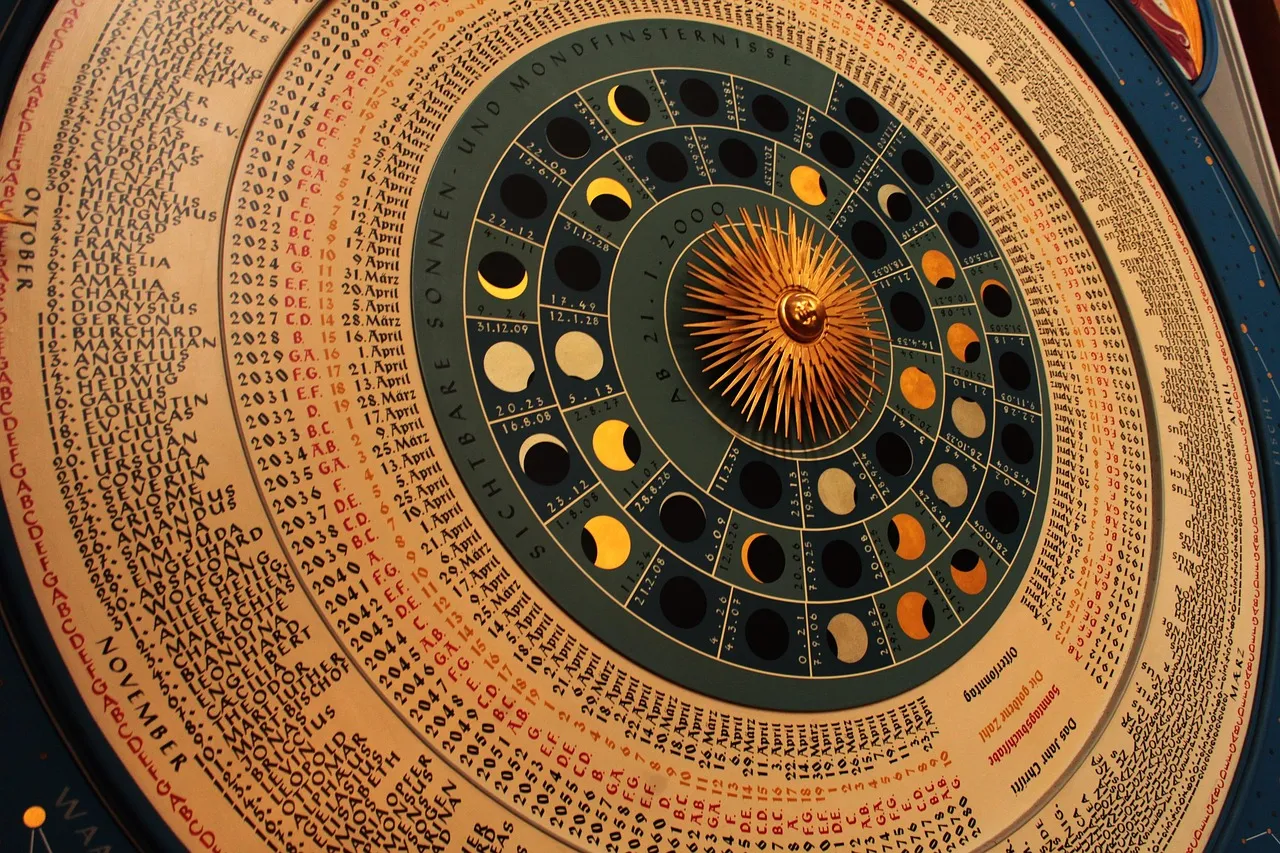
We all know that a clock is something to show us the time of day. An apparently simple device, in former centuries the sun’s course as a sign on a dial: The sundial.
To some extent that also shows nicely what can be ‘off’ at times these days: Our natural rhythms that depend highly on the light and dark changes of the region we grew up and live in.
The research on that is part of medicine as well as the humanities, social sciences: What is it that determines our health apart from moving our body regularly and eating the good food?
It’s the rhythms of sleep and being awake that in turn are based, by nature, on sunrise and darkness.
‘Circadian rhythms’ is the phrase for it. One fine entry by Harvard Medical School can be found here, a recent study’s results that are suggestive: Circadian Rhythms and the Brain
A while ago already the so-called ‘daylight saving time’ was introduced in many countries. Depending on where we live the clock will be turned forward an hour in spring and back in fall.
The original idea was to actually save energy, power consumption and thus also fossil fuels.
It already has been widely acknowledged that the effects are rather negligible in terms of power saved. On the other hand animals, children and quite a number of grown-ups feel the effects more than we would perhaps believe.
Sleep disorders or sleep deprivation are serious issues in regard to health. They can cause even illnesses.
The turning of the clock does not lead to such disorders necessarily.
But the idea of natural rhythms and an innate need for sleep, rest or wakefulness can be crucial.
Just as the self-awareness of ancient systems for improving health, such as Yoga, Ayurveda and TCM (Traditional Chinese Medicine) can make a difference in a person’s life.
So, if you were wondering too, what is helpful, it can be the start to understand that our body is a fine-tuned and highly efficient instrument, whose functions were developed over hundreds of thousands of years.
Starting to treat your body as your friend can make all the difference.