
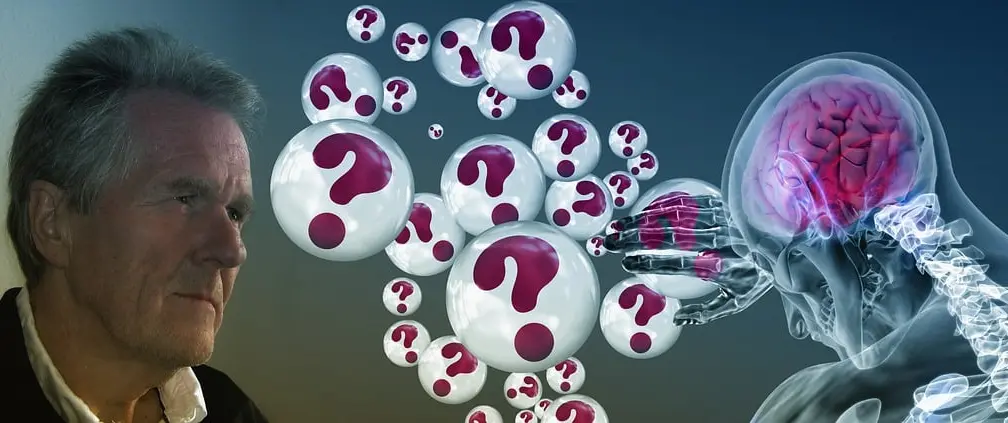
AI, so it appears, saves time: Let it summarize a longer text for you which you do not have the time to read in full. Let it make (‘generate’ = Gen AI) a little image you could use in an online blog post. Even let it create whole (short) videos to use for posting and sharing online…
Well, so far the theory.
Yet, as so often is the case, theory and practice are not the same thing at all.
You can use AI for all of the above these days. But the fact remains that AI is not really intelligent. The term ‘Artificial Intelligence’ suggests it, of course. But that’s a marketing term. Using ‘create’ as a term makes it appear as if… there was actually something creative.
Because, what AI does is reuse already known material and re-assemble in a likely manner.
How Do I Know?
As a technical writer by profession I documented AI successfully. The US-agency Gartner mentioned that documentation specially in their Magic Quadrant on Metadata Applications in 2019.
Since then I also have tested all the popular AI tools you can use for such tasks online and offline, such as ChatGPT, Le Chat, Claude, ‘Copilot(s)’ or a plugin called AMP.
In technical writing you could use these as a sort of optimization tool. Once your text is ready, let the AI go through it and optimize according to standards.
But in technical documentation as such, content creation or creation of visual material, AI is not really helpful.
Why?
-
- You need a good idea of where you want to go with this, of what you actually need.
- You then need to write a prompt for your AI tool to have it generate what you want.
- When the output is available, you need to check, for facts, for correctness of representation, for quality.
- Very often the first few attempts fail because AI will just re-use already known data for the patterns to find and re-assemble.
That’s why you often see AI-generated images or videos that look strangely puppet-like, smoothed in all the wrong places or simply skewed.
Texts on the other hand will be somehow always ‘like that other one’.
The technology behind AI makes this practically an unavoidable scenario:
-
- AI is based on algorithms: they are like chains of formulas. These formulas basically depend on probability, statistics and their patterns.
- Once the AI’s framework is in place, it will be trained on certain data that fit its use case. The algorithms and their sequences may then be refined.
- Finally the new data such as online databases is used to find more patterns, of the same or similar.
Therefore, you cannot replace humans with AI.
Because, in complex uses cases, these things take time. Because, anything you will let an AI generate will always remind you of something. It will sometimes appear a little lifeless, even strangely familiar. But it will never be unique. Never have that feel about it. And miss out on that ‘spark of inspiration’ that makes human intelligence so special.