In former times it seemed to be a matter of course to talk about the ‘silent majority’. And it also seemed to be debatable: Did it exist?
These days we know: It does!
The statistics you get from business departments such as support, online and offline, confirm:
For any person letting a company, an organization, or platform know about their issues or problems or worries, there are around 100 silent ones who do not speak up. Some are too lazy. Some are too busy. Some are just too self-conscious, don’t dare to draw attention to themselves.
Whatever the reasons may be: I also know from actual experience how often people in everyday life underestimate the universal facts of human life:
Emotions, feelings, worries and also joy so often are felt very similarly. Yet, very often also people don’t know about that and therefore feel disconnected.
Sharing helps: Experience, emotions, and thoughts. And my blog is one place where I like to share for exactly that reason. To help and to spread perhaps a (little) light of understanding.
‘Social media’ have their limitations and their uses. I use them with care – but I also know what I do not need. I can only share with any of my readers who are wondering: Make sure you ‘turn them off’ regularly, too.
Just as in former times people were wondering about being ‘in’, about ‘belonging’, so can social media these days create the impression that some things are crucial and should and have to be followed in order to be up-to-date.
That is NOT the case!
At some point you will – especially if yet young – come to realize that not ‘every thing’ is worth your while – nor ‘every body’.
Yes, the downside can be that there are people who use these channels just as they would ‘real life meetings’: To bother and torture others they find irritating.
Because that is what bullies do: They try to ‘remove’ the concept, the idea of life that seems to call their own into question.
And there are those that just have to be right, because being wrong is not contained in their own image of themselves. Almost sad really: They usually grow up believing that making mistakes is basically some sort of ‘sin’.
The thing that must not be.
I personally like to deal with social media a little like a tool that can be sharp and should be handled with care and laid down when not necessary anymore.
I like to observe a certain way of being respectful and polite.
But I also know that just as in real life there are all kinds of people around.
But I do not like to be around any kind of people… neither online, nor offline. I stick to my values and aim at spending quality time only with people of like mind.
My father put it rather graphically this way, in regard to judging the majority’s beliefs:
“If a million flies sit on excrement – do you have to sit there too?”
Most of us past teenage years have seen and experienced misunderstandings. Some can be tragic, some can seem funny even, looking back, some are funny – and some are rather mundane, really.
What can make it difficult can be situations such as the following, a nice example I came across the other day, paraphrased here:
A group of people were scheduled for a training of communication. Everybody arrived in time, wore casual clothing as per agenda and was quite relaxed, chatting and waiting for the training to begin. A little while into the day’s itinerary, a young man who everybody had been wondering about, arrived far too late. He was very quiet, wore a business suit that obviously had been expensive and showed a rather withdrawn behaviour.
The group decided that he seemed rather arrogant and they felt annoyed and treated with a lack of basic politeness.
It took a while to find out that he had been to a funeral, unexpectedly and of a close person and barely had found time to arrive at all…
This little anecdote makes it clear nicely how easily unrelated events can be made into a chain of misunderstanding.
Keeping an open mind and realizing that our interpretations can be wrong in spite of appearances can be the first step towards real understanding.
Whoever told us that life is either wonderful harmony – or we will have war? In the sense that you cannot have it both ways?
Da…n and blast to all who believe it! Is it that male (patriarchal) idea that you have to have predominance and prove ‘strong’ by shouting at people a lot? Because that way you establish ‘authority’?
Maybe. But war is not a question of gyms and some old-fashioned training ideas!
The civil society brought an even more wide-spread understanding of responsibility and the preference for peace and calm that let us thrive for a good life and good relations in peace.
Conflicts are a natural part of human life – always were, always have been.
(Cruel) arguments or wars are not ‘natural’.
They are the consequence of a mindset that values predominance and ‘first place’ the most. To force your opinion or your preferences on people is – according to that idea – a sign of strength and power.
BUT – and this is one of those BIG BUTS – it is a question of perspective:
Because anything that causes pain and suffering to many people – and additionally over a long period of time – is not a good thing! Period.
There are many ways out of conflict, some are short, because the conflict is small.
Some ways are long, because the conflict is large.
But whatever it is, if we respect the fundamental human rights we will do all the negotiating it takes, even if years, to avoid pain and suffering. Full stop.
“My way – or the highway?” In many parts of the world we can see people believing that there is only one way – or another. That other people or their behaviour or their ideas are one of two things: Black or White. A duality concept.
In truth, life and situations and people are colourful, like a kaleidoscope. Sometimes, when you are full of emotion, such as anger, wrath or a loving passion, the emotion has no ‘colour’ in the mind — it’s more of a temperature, perhaps, rather cold, or rather hot… and if you would start thinking and getting to know yourself or your emotion(s) better you would find out more details – and start finding words for them.
To think that there are only two sides to a coin is a rather narrow concept. You wil miss out on all the other possibilities – or colours.
Sometimes, when we are very sure that only one way or solution is right — at least for us — we tend to judge harshly.
That way we will overlook all the other — even beautiful — colours, in a situation, a solution to a problem — or a character.
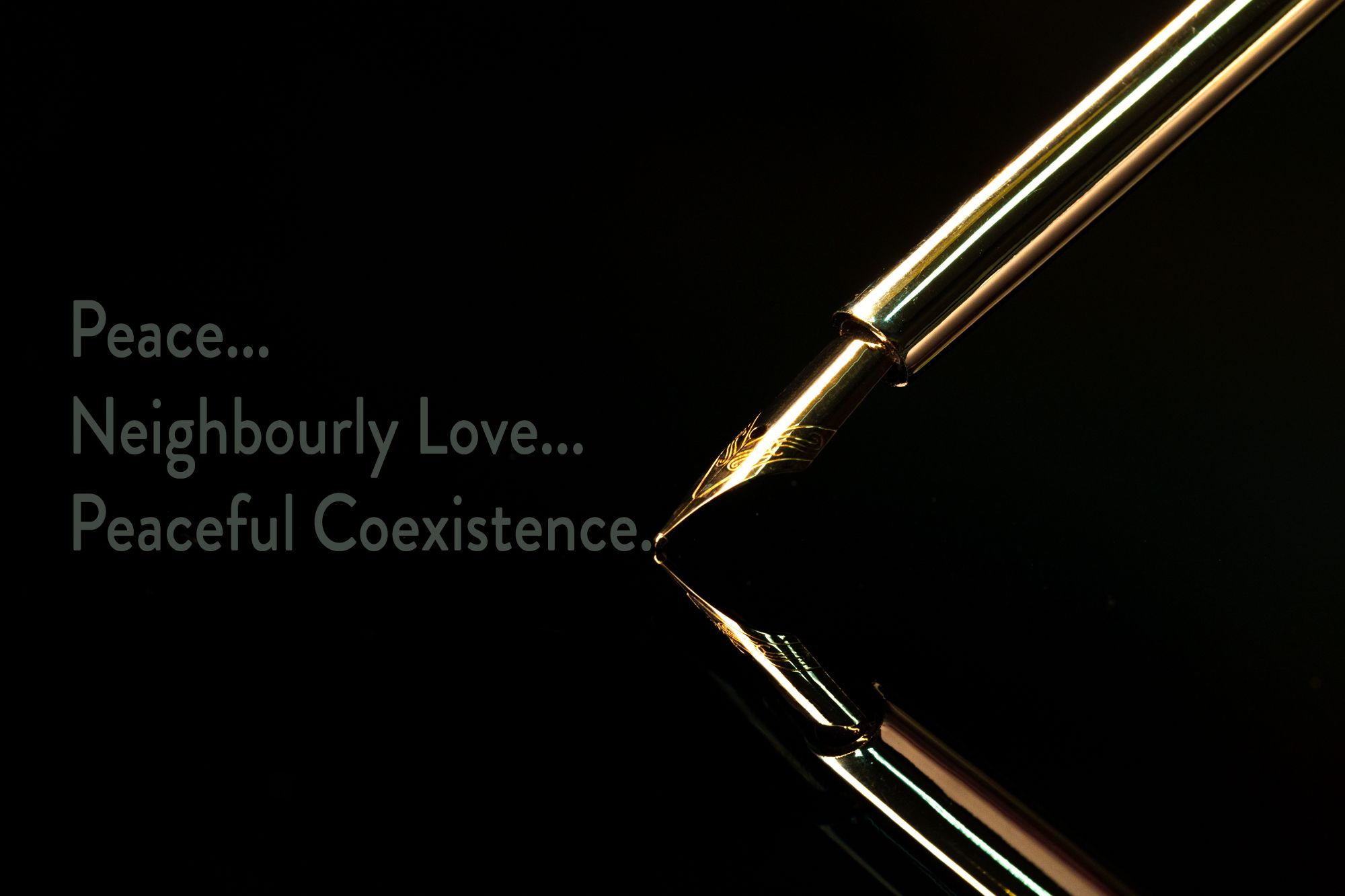
Even peace or peaceful coexistence become easier to find, if we allow for alternatives, see the ‘other colours’, the full picture.
The big idea.
And should you wonder if that was too much bother — you may want to think again: Is peace really so much more difficult, than war — or conflict? And when was it written that the good or the better things always are easy…?
Image creative commons license via Ecosia filtered search
“But he’s lying, it’s so obvious!” Apparently a group of deaf-mutes signed that when watching an interview of the then president of the United States Bill Clinton who had been publicly accused of having an affair with a visiting girl at the White House.
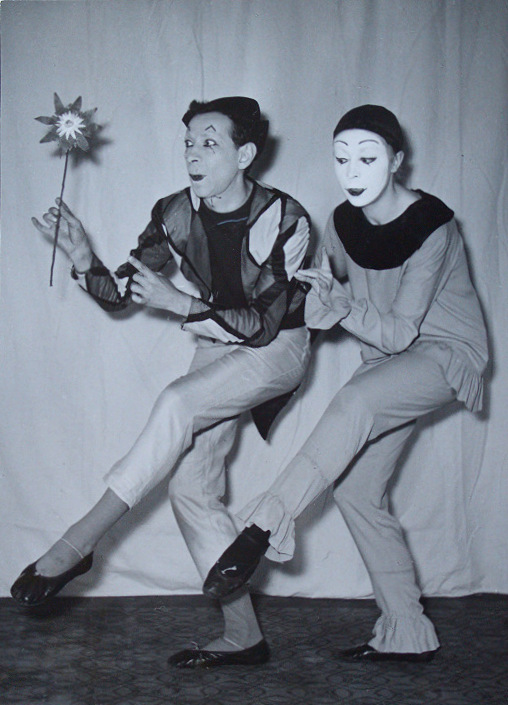
Body language:
The most powerful tool we have – and use so often unbeknownst to ourselves. Some numbers say that we communicate over 70-80% of all social exchanges through our bodies.
The world is full of languages, over 7000 are said to exist.
Apart from knowing with our hearts, learning this powerful way of expressing emotions and thoughts could be helpful.
It’s not easy, because culturally dependent. Yet, for more peace and mutual understanding – this could be one way.
Gladiator in ancient Rome fighting lion – Image courtesy Wikimedia Commons, public domain
My father was apt to express his opinions rather drastically at times. One of them was:
“If 1 million flies sit on sh…t – you have to sit there too?”
Both our parents always encouraged, even urged us to look behind images and the mere surface. Don’t be satisfied with the second best, too.
I learned at an early age that in philosophy there exists the subject of ‘epistemology’:
It states basically that humans will best understand based on previous lessons. So, if you have learned about some types of people, your own family and friends, major contacts and their ideas, you will be best at recognizing those in others, again. But more ideas and very different outlooks will be hard to grasp – or stay invisible.
There is the idea of competition: It‘s a major concept in capitalism; originally stemming from mercantile surroundings it has invaded our whole lives with that idea of constant competition, at least where it took over earlier modes of thought and evaluating people:
What is best, is determined based on the majority – or the perceived majority – of high numbers. Since high numbers promise profit.
For some reason people started to confuse the high numbers, the majority, with quality: As if adhering to fashionable, even if only apparently, fashionable ideas and appearances would make you finer automatically…
Well, depending on one‘s own measurements, the yardstick, or aspirations, one might think that high profit is good, therefore high numbers are.
But history also has shown and actual events still show that for one thing, those screaming loudest are not always right; in marketing, for example.
And that loud screaming does not always represent the real, the ‚silent‘ majority.
To boot, quality is really determined by intrinsic values or criteria, not outside ones. Always has. Always will be.
In some cases it can hurt to find yourself outside a group… but only until you start realizing that not all groups are desirable to be a member of, just because they seem to be large.
Values and measurements exist for things, and for people as well as their behaviour.
Should you be wondering on what to think about a person or some concepts, facts – or ‚screamers‘ – check values, the basic, fine values that make people and the community strong – and happy(ier).
That‘s a good starting point.
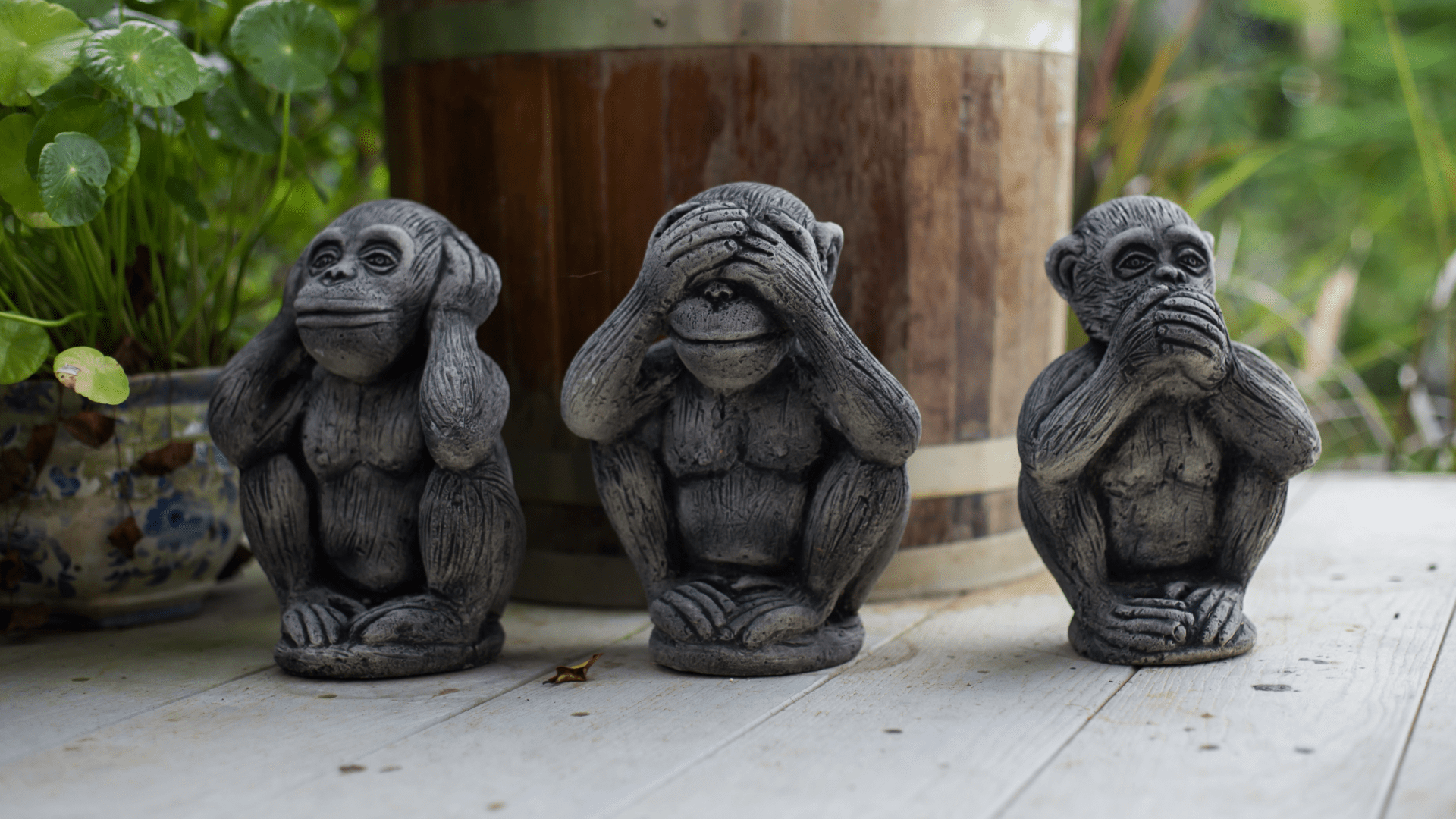
“See no evil, hear no evil, speak no evil.” The three wise monkeys are a concept, an idea, that stems from the Japanese culture. They are a proverbial idea of how to deal with bad or evil matters in human life. When you are raised on the idea that one should be truthful, that denial can be bad for you, you may be apt to wonder.
How is such an idea a good thing?
To my mind it’s two very important points to be considered here:
Words are powerful, they create images in our minds.
It’s not about denial – it’s about focus.
Images in our minds are powerful, as has been since established in scientific research too: They help us keep focus, they can drive our actions that way – and make us feel weak and insecure – or confident and strong.
One technique that also has been advocated for business negotiations and even marketing – is to ‘visualize‘:
Start using what you have learned in terms of ideas and words to actively make up the image of what you are aiming at.
Your next project, a higher level of health – or understanding, in short, some measure of self-awareness or efficacy different from before.
That’s why the idea of the three wise monkeys can help not only focus – they help us focus on all the things that make us strong, confident and positive about reaching the goal. Which does not necessarily mean wealth or power.
The community at large will benefit from such views:
From the idea that you will not listen to rumours which may be even false.
From the idea that you will not direct your gaze onto the bad or worse matters, not focus on the bad things.
From the idea that you yourself will not help either creating rumours or bad ideas – or spread those images.
Words are powerful, in all ways. That’s why focusing on the good is important.
Not because one would deny problems or difficulties or the downright evil – but because they can help to make it better, again.
…Smile when they are clouds in the sky, you’ll get by, if you smile through your fear and sorrow, smile and maybe tomorrow you will see the sun come shining through, for you…
The song above has an interesting history.
I’ve found it to be true: After many years of hardship, especially during the pandemic, things are finally looking up again. But just as Charlie Chaplin – although more lucky in some ways – I’ve found as so many people around the world:
When life is sad or difficult you learn to smile to lighten the burden(s).
The song above was originally a piece without words for a film of Chaplin’s, one of his masterpieces. He was there in the beginning of the art of movie making, he improved it and became a master and an inventor with awards and special mentions all around the world. He knew, too.
Can I say anything definitive about it – when so many others seem to have failed? There’s romance to be considered – and jealousy, there’s loneliness that sometimes makes people rush into things; there’s fear of rejection, and heartbreak. The stories and plays, poems and songs that have been made are legion; I wonder if not the whole of mankind is seeped through and through with the eternal quest for love and passion and safety – and often in vain.
I always wondered why people are and behave the way they do. Why? Pain, especially. Why would people cause others pain on purpose? Revenge is also a subject in that sphere…when emotions or just pride are hurt and people start out on a hunt, as it were, to avenge themselves.
There are the archetypes that C.G. Jung, a successor of Sigmund Freud, defined: Symbols as figures, ideas of human types of behaviour, such as the bridesmaid, the bride, the damsel in distress and so on.
Many ideas we come in contact with are involved with the idea of love. The very basic longing for harmony and closeness with another human being that Erich Fromm called the need for overcoming the feeling of separateness (quoted from memory).
As most of us I have gone through some pain in that respect myself – as well as some joy.
There are patterns of human behaviour, male and female that you often find mirrored in (usually) cheap movies and stories: They ‘feed’ on those stereotypes and can be rather distracting, if you do not look beyond the images. For your own truth as well as of that of the other person.
Patterns of power relationships are involved, deeply sometimes and most of it not consciously: In patriarchy the man is to be supposed to be always cool, calm, collected and ‘on top’ of the situation. That means that he may tend to look for a life partner slightly his inferior in education, upbringing, or income, in order to feel like a ‘real’ man.
Women in turn may easily tend to look for a ‘strong, superior’ man in order to fulfill those roles.
Sometimes these roles are a safe bet.
Sometimes they are not.
The basics I learned to be true too, by reading, observation and my own experience are these:
We tend to look for a partner who understands – us.
Passion may perhaps be easy to come by – if you are not too particular; some apparently get ‘sozzled’ with intake of substances to make that part easy. Some buy it.
Some wait for a long time to combine the ‘nature and nurture’, the experience and personal liking with a ‘soulmate’, in love and passion. My special regards to all of you people of like minds!
Whatever you do, remember these two ideas, to me they make the most sense of all:
In passion: All is fair as long as it is not done with children – and not by force. Consenting adults.
In love: “Whatever works.”
References:
Erich Fromm: The Art of Loving (Die Kunst des Liebens, German)
Alexander Lowen: Love, Sex and Your Heart (Liebe, Sex und Dein Herz, German)
Steve Biddulph: The Making of Love (Wie die Liebe bleibt, German)
Paul Watzlawick: The Situation Is Hopeless, But Not Serious: The Pursuit of Unhappiness (Anleitung zum Unglücklichsein, German)
Gerti Senger: Alles Liebe (German)