Only his death made him even more famous than his life. A tragedy indeed, since for years at least since the pandemic I look at news only every other day, sometimes once a week, carefully choosing my sources. And only learned about him today, his death being announced.
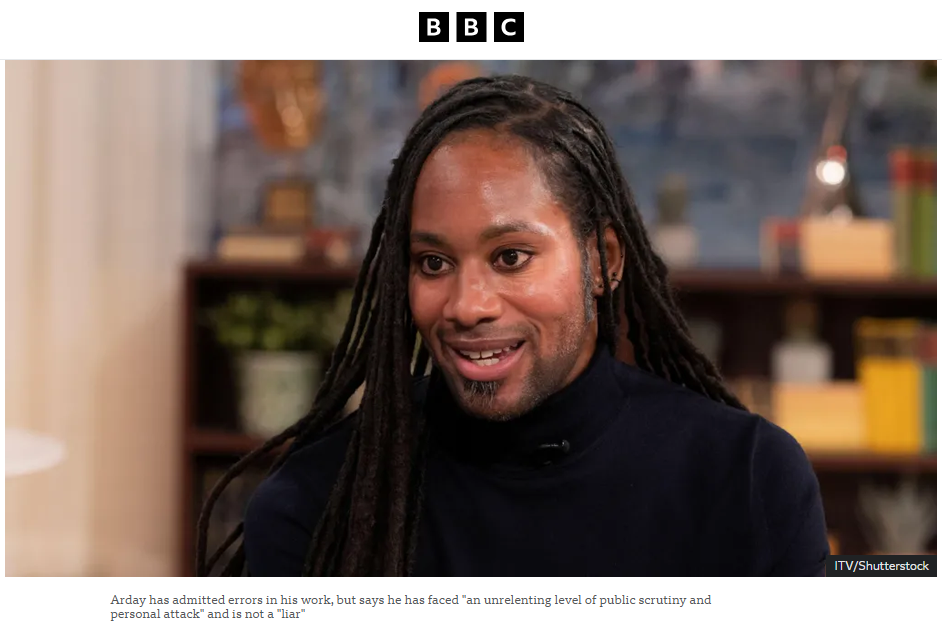
According to The Times (UK) and the BBC, Jason Arday was involved in a row about his academic achievements, posing he had committed plagiarism in his PhD thesis.
He first defended his work, admitted to some errors and a few days ago finally resigned his seat effective immediately.
A few days later he was found dead. Reasons have to be determined and officially be confirmed.
He seems by all accounts to have been a good person, especially to his friends and family. This is a tragedy indeed and can perhaps make all concerned make more aware how to deal with such matters, applying care and not make assumptions before the facts.
As in: More careful media coverage.
Most of us know that plagiarism means to use other people’s academic work, but without stating the source and making it appear as if being part of their own work. It is considered to be a serious offence and usually results in having to return the titles or positions based on such a work.
I am not an expert on that part of the ruling: There may be minor cases, with obviously a few accidental places only, throughout a thesis, places that don’t really matter to the work and its reasoning as a whole.
People driven to it doing this on purpose can be pitied at times. If they do it to gain money or influence and then abuse that, it’s serious indeed.
Minor errors can happen. The amount and actual validity of those plagiarism claims is still to be determined. Professor Jason Arday, black and in early life handicapped by autism, was the youngest ever professor to be assigned a seat at Cambridge.
He was black, which would have been one more sign for the advancement and diversity of that old and highly-respected university.
What is really important now, is not to jump to conclusions, either way. Reasons for his death as well as the yet unclear claims against his achievements have to be determined.
Whatever the results: Let’s remember that it is about people, that care and concern are more important than a ‘scoop’ – think with empathy about the pain people close to him feel – and let his soul rest in peace.