
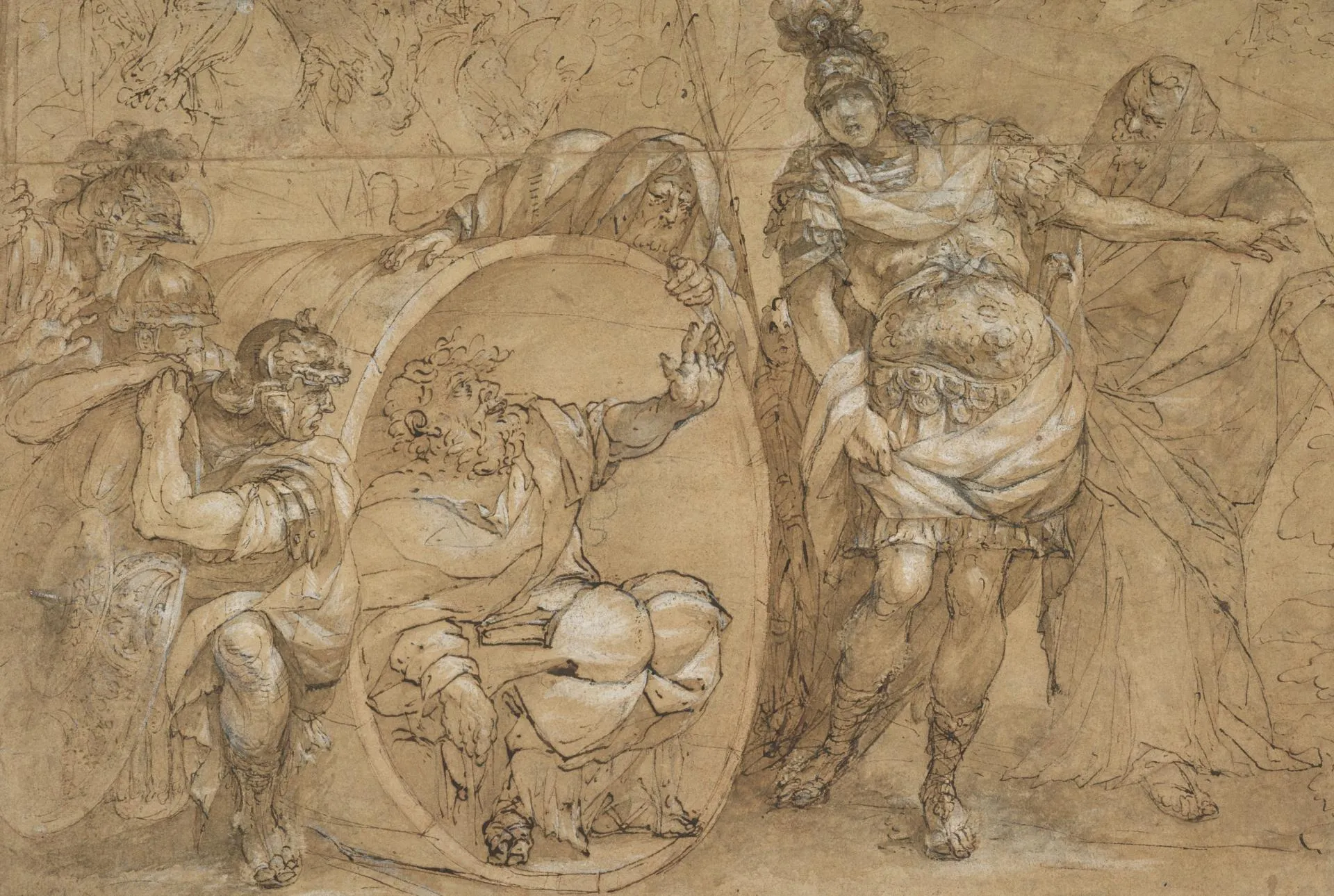
“Stand out of my sun.” Imagine that, said to the most famous conqueror and king of the time. That was Greek philosopher Diogenes talking, in ancient Greece, Corinth, to be precise, so legend has it. Talking to Alexander, who is still called the Great. Diogenes had become famous for his life style and believes: He refused all wealth, riches and luxury and is said to have lived in a barrel most of the time.
The barrel is most probably a synonym for extremely reduced living conditions. By choice, in Diogenes’ case. He was founder of a concept that circled around good deeds, and a ‘return to nature’. The natural state of living. These ideas since have frequently cropped up in the history of mankind.
People are not all the same. Sounds simple, but it is not always. Some you’d rather not meet, such as those similar to the present president of the US. The ancient legend around Alexander and Diogenes of Greece makes that point, in very simple terms:
What really counts is to train your thoughts.
For many, wealth and fame as a goal in life often are considered to be the basic: The ‘pursuit of happiness’ it is also called, sometimes.
When people start looking for happiness in wealth and fame, because the applause of others seem to make them happy – or content, you may find yourself in ‘queer street’, as that old saying goes. In war, actually, which is not as funny as that ancient ‘queer’ phrase makes it seem, but cruel.
Greed and cruelty very often come with hunger for wealth and more wealth and power. But happiness people often miss out on.
The story “How Much Land Does a Man Need?” by Leo Tolstoy, great Russian 19th century writer, is just as eloquent and clear on the subject. Although it may seem obvious, the way Tolstoy renders it, it is compelling in its vivacity.
“Stand out of my sun.” There are people, who harm others just for their own good. I’d rather not have to meet them if I can help it.