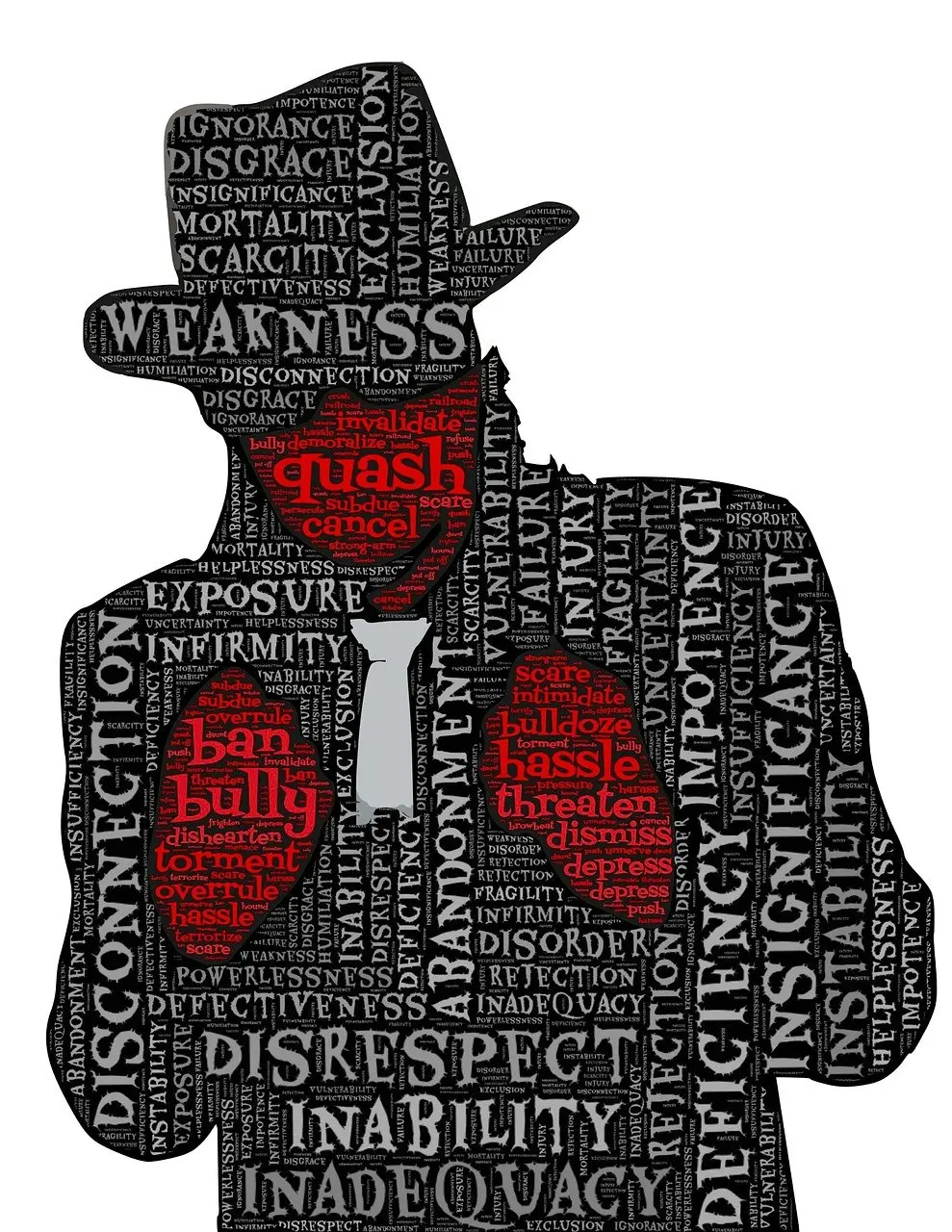
We all know them: Those kids who either bully others until they cry, or tear wings from small insects just to test what would happen. I’ve met grown-ups too, who actually behave like those kids, at times: Test others. Push them or try ‘pushing their buttons’ to see how they react…
I always thought that such people are suffering from fundamental character flaws: not realizing that torturing other living beings is cruel, a shame. And additionally probably even suffering from power fantasies: They feel ’empowered’ and important when they can ‘make’ others react. Even by torturing them.
It means: Causing pain deliberately. And it has nothing to do with fun, games or mild misdemeanors. It’s actually a lack of empathy. Maybe the patriarchal side getting in the way: Men are supposed to feel ‘superior’, self-confident. No human being in reality can feel that way all the time. That’s not only natural. It’s part of scientific research into such patterns of human behaviour and needs.
I have seen these things happen in childhood, was sometimes a target. I still now and again observe grown-up people behaving that way: ‘Testing’ their peers as it were. Perhaps even poking each other’s rips and smirking – if a little uncomfortably.
Because only in a few cases do they not know about the downside of it: Molesting, torturing or plainly causing pain is no child’s play.
Real joy in life is based on other, more ‘mundane’ and completely different aspects: Love, friendship, understanding, humour and trust. None of which can be built in a hurry.
Image by Clker-Free-Vector-Images from Pixabay and Adobe CC, my arrangement
Germany and the UN security council: I am German by birth and upbringing. Political and community responsibility were a central part of education as well as discussions in our family. As indeed in the majority of German families and households.
The security council was from the start and always will be a highly political body. When we look at unjust and forced decisions by its 5 permanent members over the past 80 years since its founding, we will start to realize that anywhere in the world power and third party interests influence such bodies.
We also can easily ascertain that good forces and good deeds are strong and at the moment still prevail throughout Europe, including Germany.
Yet, Germany reserves its right to stand up and point at injustice. These days, with an extreme-right-wing president in the US, a dictator in Russia as heads of government, who are basically best buddies, it’s practically impossible to ‘please all’.
You can please some of the people all of the time, you can please all of the people some of the time, but you can’t please all of the people all of the time.
(John Lydgate)
That’s also very clear:
We should not at any time confuse Israeli politics and the reactions to those politics with the past or present of people using antisemitism as a weapon in discussions.
It is tragic and also very true:
In politics and dictatorships all around the world certain methods were – and still are – used to manipulate those of less well-educated mind to gather and hunt those that were a minority, or are an easy target.
‘Minority bashing’ occurs in Russia, in China and the US, in the UK and France. The USA were the first – and so far the only nation – to use a nuclear bomb in a war against another.
They have forfeited their ‘right’ to be counted among the righteous at least in politics: Their present government is nothing to write home about. And that’s putting it rather nicely yet. What would you expect from a president who’s a convicted felon and his administration?
The same holds true for nations such as China or Russia, both also permanent members.
To stand up for our beliefs and the same right for all to justice, peace and support of those rights is a central aspect in German politics and has been for a long time.
I for my part think we can be proud and at the same time unassuming about the great history of science, philosophy and arts this country of Germany possesses.
Images by 경복 김, Mumtaha Tabassum and Barbara A Lane from Pixabay; my arrangement
When the USA decide on making war, they are adamant. That’s a fine quality in many respects. Yet, in war…? Or making it…? Why, really? After the attacks on the twin towers the US declared war on half the world. That attack was a tragic and cruel occurrence. But it does not provide any justification for shunning international law.
On the contrary: Laws are there for all of the community. In ancient Greece Socrates, the philosopher proved it by accepting a rule that was common then – and drinking the poison from a cup he could have avoided, as a punishment. He died.
When something goes wrong, the US are the first to claim their right, their benefit… the ‘rights’ of the NATO members, for example; that is they ask for and actually pressurize the others to spend more on their annual defense budget, 5% instead of 3%, as only happened around 1.5 years ago.
But: How often did – and do – the US to this day act cruelly against other nations? Without consulting anything but their own foreign interests? What about Japan?
The first and last time ever that nuclear weapons were used in a war. As a testing ground, more or less.
The tests of nuclear weapons in the archipelagos of Bikini they used, to spare their own country? The Bikini islands feel the consequences to this day. So nice and small and quiet and right there… easy to use.
Usage. Benefit. Profit.
That are the pillars of the US-American society and have been since their founding.
The weapons producing industry is the most important, influential and powerful there. And they benefit from NATO members ordering.
In 2003 the war on Iraq was started: “Weapons of mass destruction”, so the official message, apparently had to be recovered. Since Iraq’s dictator Saddam Hussein had apparently accumulated them breaking international agreements they had to be made safe.
To this day, those weapons weren’t found. That’s official. None.
Saddam Hussein originally had been instated with US support. He was their ‘vassal’ in a country that also has huge reservoirs of oil and gas. When he started to become too independent, war was declared. Eventually he was found and killed.
The oil wells burned for years after that. The country is devastated.
Any old lie will do.
Check your sources. Refer to books in libraries written by respected authors of the field. Check more than one important and traditional newspaper of (reasonably) working democracies.
Iran? It’s got oil. It’s got the largest oil recovery industry in the world. Uranium enrichment control contracts were in full working order until 2018, when Trump and his ‘cohorts’ cancelled them. But: the government in place since the revolution of 1979 did not succumb to US pressure.
Regarding their internal affairs that government was a poor example of a dictatorship ‘dressed’ as democracy, including all legal pressure, limitations and punishment as well as control into the bargain typical for such systems.
But let’s remember: The last shah had been instated by the US too. He sold oil to them at dumping prices. When the literally hungry and ‘huddled’ masses rose in the country, his power waned. Finally even his downfall and flight from the country was supported by the US.
The people of Iran are of a peaceful and also proud mindset. If attacked, they fight to the last. They always did. They do not sell out their country for cheap bargains to anyone.
Looking at history as well as present ideas you can be pretty sure of that.
This completely unnecessary war has to be stopped.
War: a means to an end. Indeed, often it’s more than one end only. In this case there are several:
Sell weapons (for the industry, the providers of supplies…), make a profit – or two.
Get your hands on the oil in the country: The US need oil. Iran has it, in abundance. Additionally, it’s got the largest oil recovery industry in the world.
Distract attention from severe internal problems, such as Epstein papers in the US.
Or the waning support for a president and his administration who seem to ‘lose it’ – not just once or twice, but regularly.
A president, who’s also a criminal, ruled guilty on 34 counts in front of a US legal court of law, for bribery, corruption and molestation.
The ever increasing drug problems of a society that far too long advocated the always handy pills – and the always ‘working human’.
It would be a wise man to get proper counselling well in advance – and act accordingly. But then: Whenever did the current president prove to be wise…?
He has been proven to have committed about any felony in the book… This war is a shame and a crime. Nothing else and nothing in between.
Many little things can happen in everyday life. Depending on your outlook you might think that complaining about any odd thing is part of being – demanding. Proving that you have ‘standards’ and do not put up with everything.
On the other hand it has been scientifically proven that getting into arguments and fights often, ‘saps your energy’:
That kind of energy that you feel is missing after emotional times; such as important, life-changing exams.
When you want to stay healthy and keep your ‘nerves in order’ you may want to think again about complaining. About fighting because of small annoyances.
There’s that little interesting story in workplace psychology that those who don’t complain are eventually ‘killed’ – as in: let go – just as the chicks of turkey are – speared by their mothers’ beaks because they consider the chicks to be dangerous strangers for not ‘crying out’; squeal.
I have gone through many hard times in the course of my life. Considering. I learned the hard way to keep my ‘nerves in order’.
So often, when we cool down we also will find that things are not that bad: Even deserve praise, actually. I learned that, too.
To change perspective can make all the difference.
“Pick your battles”. To live and fight another day.
Now after a month of attacks and counterattacks, alternately hopeful negotiations are mentioned in official statements and yet at the same time attacks continue. We all know that a truce could be a first step in negotiating peace.
But, what if certain parties don’t want peace, really?
“A Bully’s Paradise” ?
Because the ulterior motives are not part of statements – but can be deducted based on similar occurrences and past events?
Again, this is about power, money and thus oil; natural resources. Iran has the largest oil recovery industry in the world. Which can be partly seen from the prices rising currently to breaking point.
“Levers”: They are technical appliances; but the term is also used for an artificial ‘bottleneck’, a pressure point that is meant to make the other party to the conflict more lenient.
Or make them buckle and give in.
None of the parties concerned is apt to do that soon, so it seems: Iran, because they know what it could mean to the country as a whole, if they would ‘sell out’.
Netanyahu and Trump because they need this war: Their respective administration’s support is waning, their population needs reasons why they are put through such a lot of suffering.
But: There are no reasons that bear inspection or a closer look:
Except greed – and a too large ego – and selfishness.
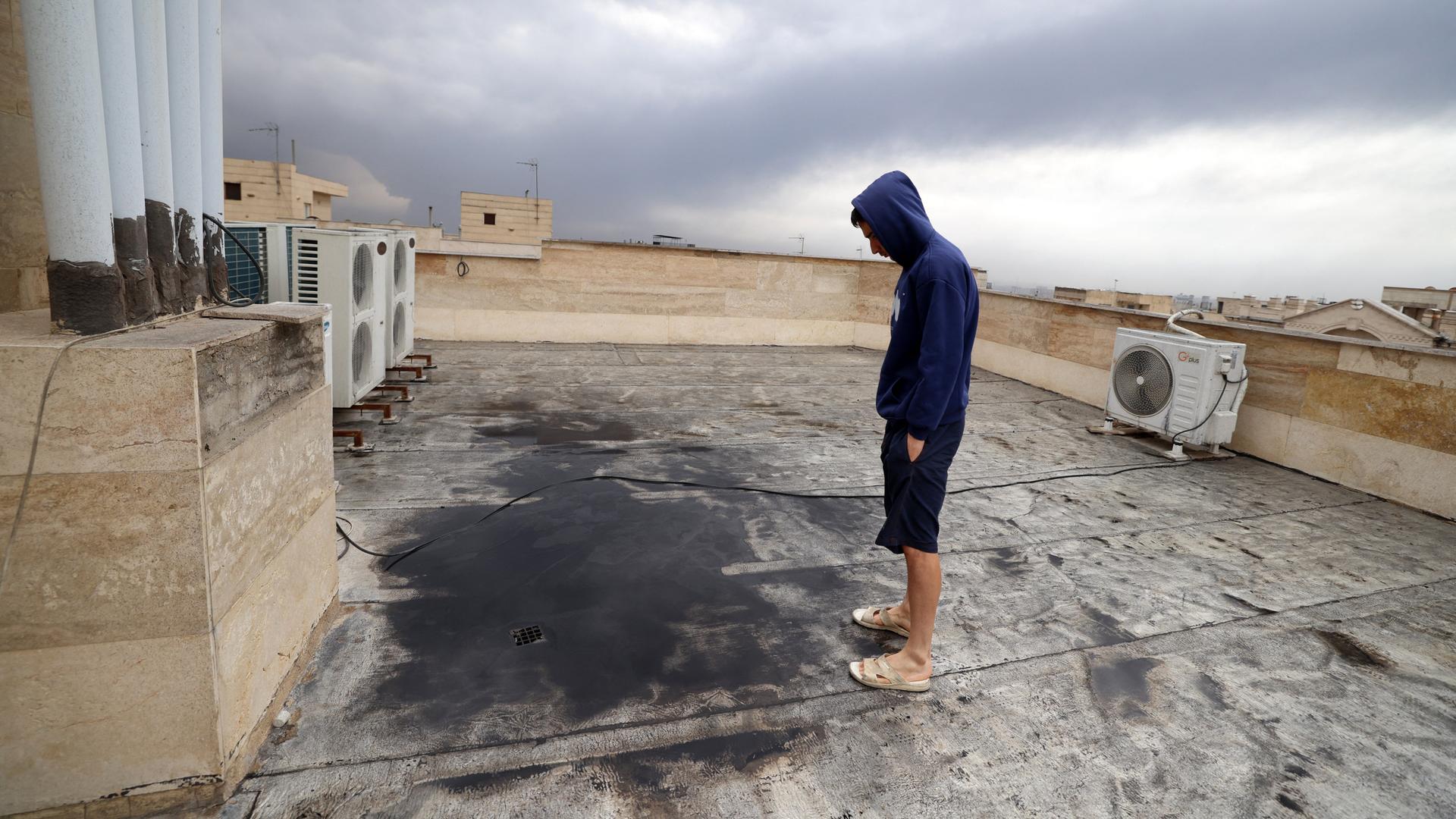
Image: Radio Deutschlandfunk (Germany), “Nach einem Luftschlag auf eine Raffinerie in Teheran ging sogenannter Schwarzer Regen auf Teheran nieder (Bild vom 8.3.2026) (AFP / ATTA KENARE)”
Prices are rising… well, what would one expect. People are being killed. Now the ‘black rain‘ over Tehran is another step towards destruction. The region going up in flames. The country scarred already and becoming another Iraq…?
It’s good to see that they are starting to act again, NATO, EU: ‘Trump’s war’ is not his doing alone, of course.
As a ‘figure head’ he ‘works’ based on the interests behind him too: The industries, most importantly the one producing weapons. The population, who as a majority depend on their ‘way of life’, namely cars for moving across country in the USA, with cheapest prices of all… they trust that any president will observe this concept, this idea, and the government will take care of petrol.
War is no heroic deed of people doing the good thing. War is not only a ‘costly affair’… it always is part of a framework of interests and needs of those in power, those with money and those with ulterior motives. Such goals are not always easy to ‘dig down to’, define.
In the news we usually get the actual event. What we need to do is more reading, to get at the facts behind the ‘images’. Reliable sources. Remember that news have statements in them, which in turn are based on interests and needs and – very often also on diplomacy.
What also helps to understand the ‘goings-on’ behind the scenes, the real motives, is this age-old concept:
“Cui bono?” – “Who benefits?”
If you ask that about anything, it will get you farther in understanding.
This is no ‘piece of cake’, especially not for those being killed and wounded every day. Being scarred for life by health risks and cruelty and greed.
We need to prove that the international community is stronger holding out against one or another country and their selfish, incompetent and greedy ‘potentates’.
It is clear to anyone who follows politics closely: Mr Trump, President of the USA, is desperate. Nothing else explains the behaviour towards Iran: The USA are even historically famous for their need of oil. Of fossil fuels.
The economy in the USA is failing and has been for years just as it has everywhere else. The pandemic has taken its toll.
The weapons’ industry in the USA is the most powerful of all. When you don’t make war, you don’t need to produce weapons.
That’s why wars are so ‘profitable’: The president profits from the ‘noise’ and news around apparent enemies that have to be fought. No one will look at his criminal record anymore. (Link to New York Times article.)
The industry producing weapons also profits: The storage spaces will be lightened of their ‘burden’ and new weapons have to be bought.
With the tax payers’ money, to boot. And the soldiers that might die?
Let them not fool us: Iran’s internal politics are cruel and brutal towards their population, against human rights and especially those of women.
But this is not about Iran’s population: This is about its oil and the power and the money. It’s between Iran and the USA.
Later, March 1st 2026: What will happen, if a new government actually would be instated in Iran that of course would be cheek by jowl with the US? For decades the Palestinians had to try and hold their ground. Ground that was originally theirs to keep as per agreements after the founding of Israel.
What will happen to Iran itself? A copy of Western civilisations, with the values and particular ways gone…?
What will happen to its oil and the USA’s needs…?
Hopefully enough people will start thinking about this early. The factions inside and outside of Iran are even now distinctly discernible.
Let’s hope that a fate like that of Iraq will be spared them. Iraq’s dictator Saddam Hussein had been supported for decades by the USA as well. They even helped him getting ‘up’. When he started to become too independent, his fate was sealed.
Anyone with the least bit of knowledge of recent history (past couple of decades) and the main characters involved knows: It’s not about anything but oil. And that sad excuse for a man being US-president who is not only fighting for his ‘job’, but also probably has to fulfill more or less secret promises to industry leaders. Rather less secret, I should think…
When we look into history these things can become clearer, since patterns emerge. It’s not about conspiracy theories but facts.
Facts are, and have been as long as the industrial revolution and cars as well as factories clamored for ever more oil and gasoline and petrol and… you name it – especially in the US – that this dire need of fuels triggered all kinds of wars and pushy international behaviour.
Fuels made from fossils, in short.
It’s shameful to watch how the second time in office makes this person even more ruthless, reckless and actually disgusting.
I know a lot about Iran, I love that old, wonderful culture and language. I know how much the people there suffer from the internal affairs a regime of apparently religiously motivated clerical leadership creates for them in severe restraints to personal freedom and denial of the basic human rights.
Yet, there are signs that since threats don’t work with Iran’s regime and international support is strong, triggering uprisings is the next step a country like the US famous for its ruthless interventions and conquering when to their advantage, ‘protecting their interests’ (‘dohhh’…in foreign countries??) – will stoop to.
Let’s be very aware: Even with more enlightened and very capable leaders at the top the US usually looked out for their own monetary and resources’ needs – not those of others. Look at confirmed chronicles and stories, Vietnam, Korea, Afghanistan, South-America (Chile, Columbia, Nicaragua/Iran…you name any, literally any of them, they consider South America to be their ‘backyard’), Irak, now Venezuela; it’s criminal. Period.
The first to condemn when also to their advantage the last to pull back; almost all the time, with a few fine leaders as exceptions.
The CIA as well as other secret services are part of the system: They determine the knowledge that will be handed down to any new president as soon as he’s inaugurated. (I feel for them sometimes: They all turn grey on top inside of days, after that…)
Iran now: It’s ‘bang full’ of oil and other natural resources. So, after cancelling the contracts for control of uranium enrichment without cause and then bullying and threatening for a couple of years and then realizing that there’s EU, UNO and even some NATO members to be reckoned with – they now try again differently?
The CIA was involved when the last Shah was ‘sent packing’: He had become unable to control the starving masses who saw him and his entourage live in luxury while they weren’t even able to read. The so-called White Revolution was ‘too little too late’. The Islamic Revolution for the past four decades removed Iran’s oil for discount prices from their reach.
The US’s own oil deposits are not nearly enough to feed that greed. That dire need: Keep ‘promises’ and keep US population on the road, because the car is their (second) best-loved device, right after weapons, so it seems.
I beg the pardon of the good ones; but the smart ones over there know what I mean.
Again, be very wary of a country like the US who literally use any means – especially with this ‘leader’ – to reach their self-centered goals.
Author’s Note: The idea of people feeling threatened by all kinds of things, making up conspiracy theories to fit their particular view of the world, is wide-spread. Especially these days. Yet:
There are historical facts known at the respective university departments too. Which can be found in books you can find in all major libraries.
I know that too, because I studied the subject. I received my M.A. degree for English, US-American and Persian language, literature and culture almost 20 years ago, from a well-known university in Germany.
I feel dedicated to the concept of being careful about your facts.
I summarize things here that can be found in more detail elsewhere.
But some things that happen at the moment have reasons that can only be guessed at, this very moment.
The intelligent guesses we can make stem from all those historical facts and the patterns that emerge over time, because it’s the same thing over and over again.
Bluntly put: It’s just too obvious but partners of NATO are not free to say so in front of cameras. The contracts we are bound to as members of NATO and other alliances compel people to keep quiet in public.
That’s why historical documents are so important for a deeper understanding: They show what at the time had been handled behind the scenes as well.
Image by Dorothe Wouters, and general content, from Pixabay
“Negotiate the hell out of them”… da…rn it. – I’d like to say that directly sometimes to the people concerned at present trying to reach an end to that war, that was unnecessary in the first place, if…
Yes, if people would do their homework, people in power learn from history, and those who know:
Diplomats, for centuries learned ‘at their mothers knee’ what is essential in any kind of politics you may want to conduct:
Realize that in politics it is about money, power and – 3rd party interests, those of your own country as well as those of others.
Know your opponents’ interests as well as possible.
Realize that it is about power-balance just as much as saving face!
The one-time elegance of manners stems also from here: Get to realize that treating the opposing party with respect and the usual formalities makes all the difference.
Learn to be patient! Patience – without giving up, or in – is the most important characteristic of successful negotiating.
The Thirty Years’ War in Europe raged exactly that: 30 years.
Whole regions were wasted and cities laid bare because of plundering, murder and legions of soldiers passing that had to be kept, resulting in hunger, starvation and more death.
The weapons’ industry and its entourage are the only ones – if they survive it – that profit from a war.
So, let’s keep telling them: We want peace, we want a power-balance, at least. We want that cruelty and useless destruction to stop, now.
The Thirty Years’ War took 5 years to end it. 5 years of negotiations.
Patience is the order of the day. Not more profit from yet more weapons.